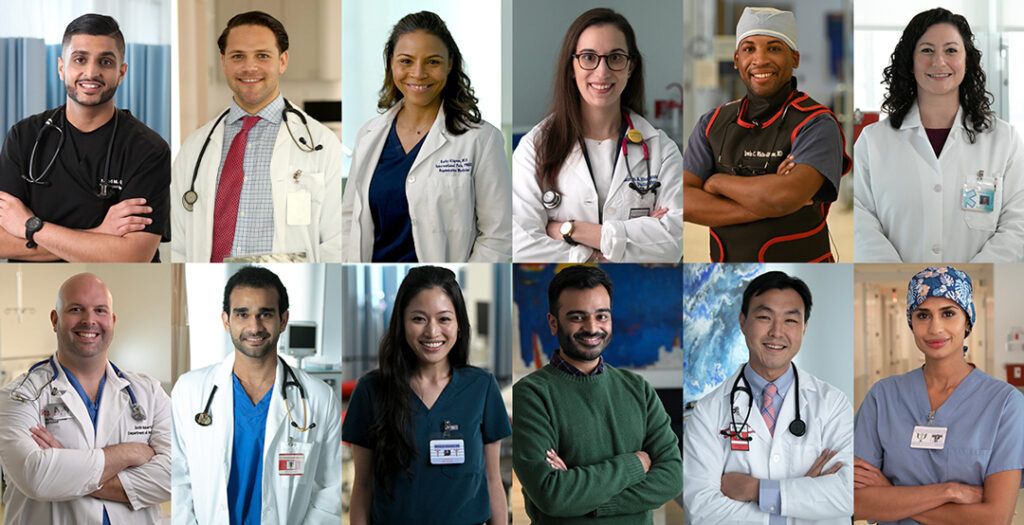
Are Caribbean medical schools legitimate? It’s a question many aspiring physicians ask, and one that often comes with a fair amount of skepticism.
With so much emphasis placed on US-based programs, it’s easy to assume that studying medicine abroad may come with added risks or limitations. But the reality is more nuanced. Each year, the number of qualified applicants to US medical schools exceeds the number of available seats, leaving many capable students without a spot.
International medical programs, including those in the Caribbean, help address this gap by offering an alternative pathway into medical education.
The key is understanding how to evaluate these programs. Legitimacy isn’t determined by location, it’s defined by factors like accreditation, student outcomes, and the ability of graduates to secure residencies and pursue licensure.
In this article, we’ll break down common misconceptions and explore what actually matters when assessing Caribbean medical schools, so you can make a more informed decision about your future.
What makes a medical school legitimate?
When evaluating the credibility of non-US medical schools, it’s important to focus on objective standards rather than assumptions about location. A medical school’s legitimacy is defined by whether it prepares students for licensure, residency, and clinical practice.
Key factors to consider include:
- Accreditation and recognition: Schools should be accredited by recognized bodies and aligned with global standards, such as those acknowledged by the World Federation for Medical Education (WFME).
- Eligibility for licensing exams: Students must be eligible to sit for exams like the United States Medical Licensing Examination (USMLE), which is required for licensure in the United States.
- Residency pathway access: Graduates should be eligible to participate in residency matching processes.
- Clinical training opportunities: Strong programs provide clinical rotations through affiliated hospitals and healthcare systems.
- Licensing pathways for graduates: Programs should support graduates in obtaining licensure in their intended country of practice.
Outcomes of international medical programs: What the data shows
Looking at the outcomes of international medical programs can provide important context when comparing different pathways to becoming a physician.
- Residency placement in context: International medical graduates participate in the same residency application process as US graduates. Outcomes vary based on exam performance, clinical experience, and specialty choice.
- USMLE performance: Licensing exam results are often used as a benchmark for how well programs prepare students for clinical practice.
- Representation in the US workforce: International medical graduates make up approximately one-quarter of practicing physicians in the United States, reflecting their role in the healthcare system.
- Specialty distribution: Many graduates pursue primary care fields, while others enter a range of specialties depending on individual performance and competitiveness.
These data points highlight that outcomes are shaped by preparation and opportunity, not geography alone.
Myths about Caribbean medical schools: What to know
There are many misconceptions about Caribbean medical schools, but understanding how these programs are structured—and how outcomes are measured—can provide a clearer perspective.
Below, we’ll break down some of the most common myths and what prospective students should consider when evaluating their options.
Myth #1: Caribbean medical students can’t specialize
Across all medical schools, both in the United States and internationally, many students match into primary care specialties. This is largely driven by the number of available residency positions and ongoing physician demand.
The assumption that this is the only path for students at Caribbean medical schools, however, is not accurate.
For example, SGU graduates matched into 23 different specialties in 2026.* While many entered primary care fields such as internal medicine and family medicine, others pursued specialties including pediatrics, anesthesiology, and neurology.
Read more: Match Day 2026: 804 SGU Students and Graduates Match into Residencies
For instance, SGU alumna Dr. Njambi Mathenge pursued a cardiology fellowship at Massachusetts General Hospital, a Harvard Medical School affiliate. Her path reflects how specialty outcomes are shaped by individual performance and training opportunities.
Myth #2: Large classes mean poor training
Some Caribbean medical schools have larger class sizes, which can raise questions about individual attention. However, class size alone doesn’t determine the quality of medical education. What matters more is how the program is structured to support student learning.
While lectures may take place in larger settings, many programs incorporate small-group learning, labs, and case-based instruction. These smaller settings allow students to engage more directly with the material and apply concepts in a collaborative environment. Because instructional models vary by program, it’s important to understand how coursework is delivered and what academic support systems are available. Reviewing outcomes and student support resources can provide additional insight into how a school supports learning.
A more meaningful way to evaluate a learning environment is through student outcomes. Licensing exams such as the United States Medical Licensing Examination (USMLE) and the Medical Council of Canada Qualifying Examination (MCCQE) are widely used benchmarks for assessing academic preparation.
For example, SGU students who took the USMLE Step 1 for the first time between 2020 to 2024 achieved an 83 percent pass rate.** In addition to classroom instruction, clinical training environments, such as hospital rotations, play a key role in preparing students for real-world medical practice.
Ultimately, the effectiveness of a medical program is shaped by its structure, support systems, and outcomes, not just the number of students in a lecture hall.
Myth #3: Caribbean medical schools have low admission standards
Admissions standards vary across Caribbean medical schools, and it’s important to recognize that programs differ in how they evaluate applicants. Like medical schools in the United States, international programs exist along a spectrum, some are more selective, while others offer alternative pathways for qualified candidates.
Many programs use a holistic review process, considering not only academic metrics like MCAT scores and GPA, but also factors such as life experience, motivation, and readiness for the demands of medical training.
This approach is often tied to a broader structural issue: each year, the number of qualified applicants to US medical schools exceeds the number of available seats. International programs help address this gap by providing additional pathways into medical education.
Rather than focusing on whether admissions are “easy,” it’s more useful to evaluate whether a program admits students prepared to succeed and provides the support needed to help them progress.
Myth #4: Caribbean medical schools take tuition without supporting students
Medical school is a significant financial investment, regardless of location. Costs can vary widely across programs, making it important to evaluate not just tuition, but the outcomes and support systems that contribute to student success.
Looking beyond tuition, financial outcomes can provide additional context. Loan default rates, for example, can offer insight into whether graduates are progressing through training and entering professional practice. Strong programs also provide structured academic support, such as faculty advising, small-group instruction, and resources designed to help students prepare for licensing exams and clinical training.
Attrition rates are another important metric to review, as they reflect how students progress through the program and what level of academic support is in place. Access to clinical rotations through established hospital partnerships is also essential, as these experiences prepare students for residency and real-world patient care..
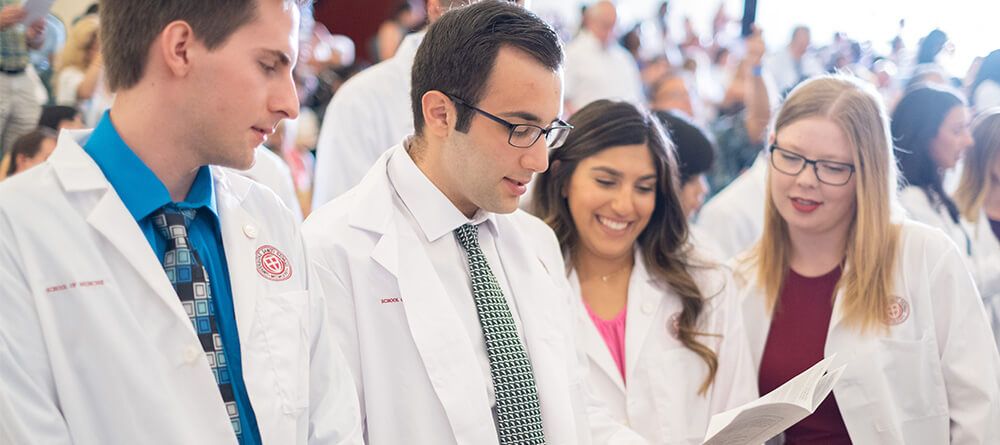
Support levels can vary between programs, which is why it’s important to evaluate how schools structure student support, from academic resources to clinical training and career preparation.
Myth #5: Residency match is impossible
Residency training is a required step for all medical graduates pursuing licensure in the United States. International medical graduates (IMGs) participate in the same residency application process as US graduates and represent more than 25 percent of practicing physicians in the US.
Residency outcomes can vary between schools, which is why it’s important to evaluate programs individually rather than viewing all Caribbean medical schools as a single group.
Match outcomes are influenced by several factors, including:
- Performance on licensing exams such as the USMLE
- Clinical experience and evaluations during rotations
- Strength of residency applications and letters of recommendation
- Specialty selection, as some fields are more competitive than others
Some specialties are more competitive for all applicants, regardless of where they attend medical school, while others offer a larger number of available positions
For example, SGU placed 800+ graduates into US residencies.***
Ultimately, residency placement is shaped by preparation and performance throughout medical training, not geographic location alone.

How to evaluate Caribbean medical schools (decision checklist)
If you’re comparing medical schools, it’s important to move beyond general perceptions and focus on specific criteria that indicate how a program supports student success. The following checklist can help guide your evaluation:
- Accreditation status: Confirm that the school is accredited by a recognized body and aligned with international standards. Accreditation ensures the program meets established requirements for medical education.
- USMLE eligibility: Verify that students are eligible to sit for the United States Medical Licensing Examination (USMLE), which is required for licensure in the United States.
- Residency placement transparency: Look for schools that clearly report residency outcomes, including how placement rates are calculated and what percentage of students secure positions.
- Clinical rotation network: Evaluate where and how students complete clinical training. Established hospital partnerships are essential for gaining hands-on experience and preparing for residency.
- Graduate licensing success: Consider whether graduates are able to obtain licensure and practice in their intended regions, such as the United States or Canada.
- Attrition disclosure: Review whether the school provides transparent data on student progression and completion rates. This can offer insight into both academic rigor and student support.
Using these criteria can help you more effectively assess programs and determine which ones align with your goals for medical training and long-term career outcomes.
Common misconceptions about offshore medical schools
Many of the misconceptions about offshore medical schools stem from treating all programs as if they are the same. In reality, there are important differences that can significantly impact outcomes.
Geography doesn’t define quality
A school’s location alone does not determine the strength of its education. Factors like accreditation, curriculum design, and clinical training opportunities are far more meaningful indicators.
Programs vary widely
There is significant variability between offshore medical schools. Admissions standards, student support systems, clinical networks, and outcomes can differ from one program to another.
Outcomes depend on structure and performance
Student success is influenced by both the program and the individual. Curriculum, academic support, and clinical experience all play a role, along with factors like exam performance and residency application strength.
International graduates are part of the US healthcare system
A substantial portion of physicians practicing in the United States completed their medical education internationally, reflecting the role global medical education plays in training doctors who serve diverse patient populations.
Understanding these distinctions can help prospective students move beyond assumptions and make more informed decisions when evaluating their options.
Conclusion: Evaluating Caribbean medical schools with confidence
So, are Caribbean medical schools legitimate?
The answer depends on the individual program. Some meet established standards for accreditation, training, and graduate outcomes, while others may not. Legitimacy is not determined by location, but by how effectively a school prepares students for licensure, residency, and clinical practice.
That’s why taking an evidence-based approach is essential. By evaluating factors like accreditation, USMLE eligibility, residency outcomes, and clinical training opportunities, you can move beyond assumptions and focus on what truly supports your future as a physician.
As you explore your options, use the checklist above to compare programs side by side. Reviewing residency outcomes, clinical networks, and academic support systems can help you better understand how each school prepares students for success.
If you’re ready to take the next step, explore St. George’s University’s approach to medical education, including residency placement outcomes, accreditation, and clinical training opportunities, to see how these elements come together in practice.
*Data as of March 2026.
**Total results from the five calendar years 2020-2024. First-time pass rate is defined as the number of SGU students passing USMLE Step 1 on their first attempt divided by the total number of SGU students taking USMLE Step 1 for the first time within the given time range. In order to be certified to take USMLE Step 1, students are required to pass all basic sciences courses.
*** Data as of March 2026
This article was updated from August 2022 with the most recent facts and figures available. .
Frequently asked questions
Are Caribbean medical schools legitimate?
Some Caribbean medical schools meet established standards for accreditation, training, and graduate outcomes, while others may not. Legitimacy depends on factors like accreditation, licensing eligibility, and residency outcomes, not location alone.
How can I tell if a Caribbean medical school is accredited?
You can verify accreditation by checking whether the school is recognized by appropriate governing bodies and aligned with international standards. Reviewing official accreditation listings and school disclosures is a good starting point.
Can you take the USMLE after attending a Caribbean medical school?
Students at eligible Caribbean medical schools can take the United States Medical Licensing Examination (USMLE), which is required to pursue licensure and residency training in the United States.
Do Caribbean medical school graduates get residencies in the US?
International medical graduates participate in the same residency application process as US graduates. Outcomes vary based on factors like exam performance, clinical experience, and specialty choice.
Why do some students choose Caribbean medical schools?
Caribbean medical schools provide an alternative pathway for qualified students who are not admitted to US programs due to limited capacity, allowing them to continue pursuing a career in medicine.
Are Caribbean medical schools easier to get into than US schools?
Admissions standards vary by program. Many schools use a holistic review process that considers academic performance alongside experience, motivation, and readiness for medical training.
What should I look for when comparing Caribbean medical schools?
Key factors include accreditation, USMLE eligibility, residency placement transparency, clinical rotation opportunities, graduate licensing outcomes, and student support systems.
Do Caribbean medical schools offer clinical rotations in the US?
Some programs provide clinical training through affiliated hospitals in the United States and other countries, giving students hands-on experience in real healthcare settings.