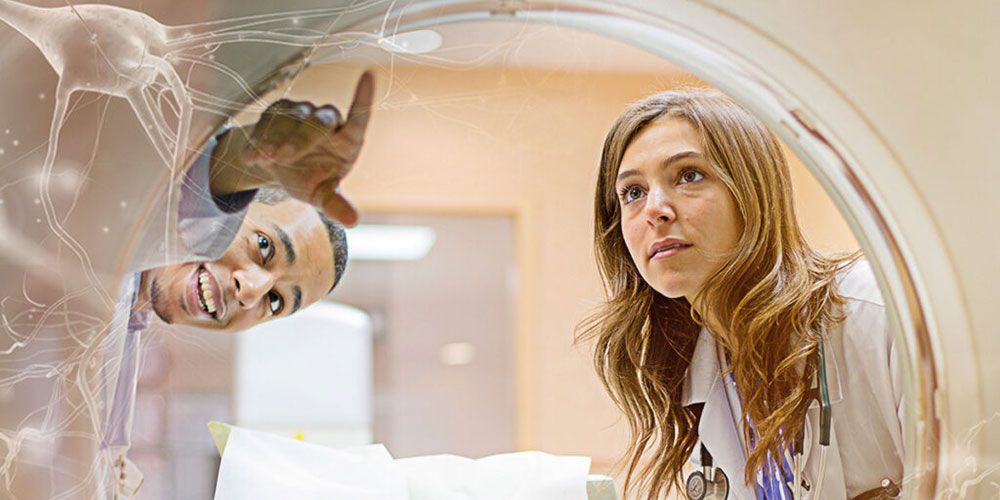
A neurologist is a medical doctor who diagnoses and treats conditions affecting the brain, spinal cord, and nervous system. From migraines and epilepsy to stroke and Parkinson’s disease, neurologists play a critical role in diagnosing and managing complex neurological conditions.
For many aspiring physicians, choosing a specialty is one of the most important decisions in their medical journey. Some students enter medical school with a clear direction, while others take time to explore where their interests and strengths align.
“The most challenging part of my career was figuring out what type of doctor I wanted to be,” admits Dr. Stephanie Alessi-LaRosa, fellowship-trained sports neurologist and graduate of St. George’s University (SGU) School of Medicine. “But once I decided, I never looked back and have enjoyed every aspect of the journey—it has all been so worth it.”
If you’re like Dr. Alessi-LaRosa and have a natural sense of curiosity and a desire to solve problems, neurology could be an ideal career path for you.
Keep reading to learn what neurologists do, the conditions they treat, and how to become one.
What does a neurologist do?
Neurologists focus on evaluating symptoms, making diagnoses, and managing conditions that affect the nervous system. While neurology is often confused with neurosurgery, the two fields are distinct. In fact, neurologists do not perform surgery at all.
In practice, their evaluations help determine where an issue may be occurring within the nervous system, which guides the diagnosis and treatment plan that follows.
Conditions neurologists treat
Neurologists work with patients experiencing a wide range of neurological conditions, including:
- Alzheimer’s disease
- Epilepsy
- Migraines
- Stroke
- Parkinson’s disease
- Multiple sclerosis
- Brain tumors
- Tourette syndrome
Patients are often referred to a neurologist by a primary care provider when symptoms suggest a neurological condition.

How neurologists diagnose and evaluate patients
After an initial evaluation, neurologists use a combination of clinical expertise and diagnostic testing to better understand a patient’s condition and confirm a diagnosis.
This process often begins with reviewing a patient’s medical history and symptoms, followed by a neurological exam to assess functions like movement, coordination, and cognition. From there, neurologists may recommend additional testing, including:
- Magnetic resonance imaging (MRI)
- Computed tomography (CT) scans
- Electromyography (EMG)
- Electroencephalography (EEG)
- Lumbar punctures
These tools allow neurologists to evaluate both the central and peripheral nervous system and guide treatment decisions.
For those considering a career in neurology, this diagnostic process is a core part of the role. Neurologists are often tasked with piecing together complex symptoms and test results to form a clear diagnosis — a challenge that many in the field find especially rewarding.

Day-to-day responsibilities can vary depending on a neurologist’s area of focus and work setting. In hospitals, neurologists may treat acute or life-threatening conditions, while outpatient care typically centers on diagnosing and managing chronic neurological disorders.
When seeing new patients, neurologists conduct comprehensive consultations that include reviewing medical history, discussing symptoms, and performing physical exams. Follow-up visits with existing patients are often focused on managing ongoing conditions, adjusting treatment plans, and improving quality of life.
Why choose a career in neurology?
For many aspiring physicians, neurology stands out as a field that combines scientific discovery with complex problem-solving.
“Practicing neurology is like piecing together a puzzle,” says Dr. Catherine Alessi, neuromuscular specialist and St. George’s University (SGU) graduate. “Each piece of the patient’s history, their exam findings, and their diagnostic workup puts together a much larger picture.”

What are some neurology subspecialties?
Research supports this appeal. One study published in Neurological Research found that physicians are often drawn to neurology for its intellectual challenges, complex diagnostic work, and the opportunity to help patients with a wide range of conditions.
“Practicing neurology is like piecing together a puzzle.”
Plus, with a number of ongoing advancements in neuroscience, there’s never been a more exciting time to make a meaningful impact in the field.
“We are now in an era where we are treating diseases that were once thought to be untreatable,” Dr. Alessi says.
What are some neurology subspecialties?
Neurologists have the option to specialize even further if they choose, giving physicians the flexibility to focus on specific conditions, patient populations, or types of care. Some choose to seek subspecialty certification from the American Board of Psychiatry and Neurology.
“There are so many options in the type of neurologist you want to be or area of neurology to practice, you can really make your career what you want,” Dr. Alessi-LaRosa says. You can obtain certification in a number of neurology subspecialties. Here’s a sampling of some of the options:
- Brain injury medicine: Physicians in this subspecialty focus on individuals who’ve suffered a brain injury, working to provide quality care throughout the recovery process.
- Clinical neurophysiology: These specialists spend their careers treating nervous system disorders using both clinical evaluation and electrophysiologic testing.
- Epilepsy: Neurologists in this specialization work specifically with individuals who have recurrent seizures or seizure disorders.
- Hospice and palliative medicine: These physicians provide end-of-life care for patients, working to address the physical, psychological, social, and spiritual needs of those individuals and their families.
- Neurocritical care: Specialists in this area of expertise provide intensive care to patients with life-threatening neurological conditions.
- Neurodevelopmental disabilities: This subspecialty focuses on chronic conditions that affect both the developing and mature nervous system, including cerebral palsy, autism spectrum disorders, and learning disabilities.
- Neuromuscular medicine: These specialists diagnose and treat conditions that affect the nerves and muscles, such as amyotrophic lateral sclerosis (ALS) and muscular dystrophy.
- Pain medicine: Physicians in this neurology specialty work with patients who have acute, chronic, and cancer-related pain. They coordinate care with other specialists as well.
- Sleep medicine: These neurologists are trained to manage clinical sleep conditions.
- Vascular neurology: Physicians who practice vascular neurology treat conditions that affect the structure and function of blood vessels supplying the brain and spinal cord. They’re sometimes called stroke specialists.
How do you become a neurologist?
Becoming a neurologist requires several years of medical education and training, beginning with medical school and continuing through residency and, in some cases, fellowship training.
Medical school is the first step, where students complete two years of classroom and lab instruction followed by two years of clinical rotations.
During this time, students also begin the United States Medical Licensing Examination (USMLE) series. Most take Step 1 near the end of their second year and complete Step 2 during their third or fourth year.
In the final year of medical school, students apply for residency programs, attend interviews, and learn where they will train on Match Day.

Neurology residency typically lasts four years, including an initial internship year in internal medicine. Some programs combine these components, while others require a separate internship placement.
For those interested in further specialization, additional fellowship training is required.
Finally, neurologists must obtain state licensure and may pursue board certification before beginning to practice.
Is a career in neurology right for you?
Neurology is both a challenging and fascinating field of medicine. If you’re interested in solving complex problems and making a meaningful impact on patients’ lives, it could be a strong career path to consider.
“I like to think of neurologists [as] detectives, because we strive to make sense of any list of a patient’s symptoms with a single neurologic condition,” Dr. Alessi-LaRosa says. She urges aspiring physicians who are interested in this specialty to explore more.
“Neurologists are needed in all parts of the country, and we are true experts in what we do,” she says. “As a result, we feel a great sense of satisfaction and reward in what we do for our patients and their families.”
Before you can begin pursuing neurology, you’ll need to complete your foundational medical education and training. The first step in that journey is applying to medical school. Learn more about the requirements by visiting our article, “A Sneak Peek at the Medical School Application Process.” Or, if you’re ready to begin your journey toward a career in medicine, you can apply to SGU’s MD program.
This article was updated from December 2021 with the most recent facts and figures available.