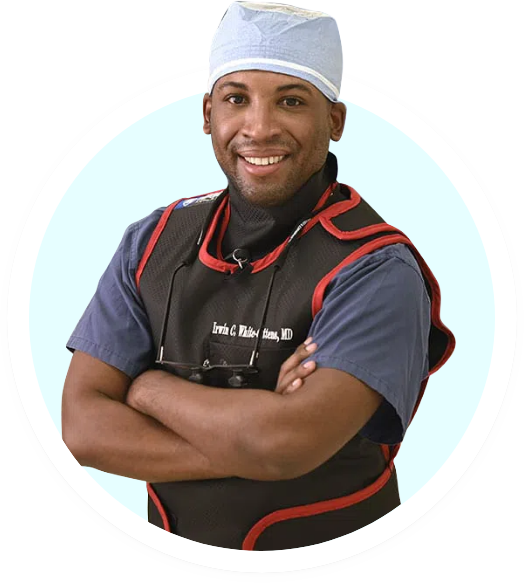
Godino Kalungi, MD ’18, MPH ‘20, is a St. George’s University (SGU) School of Medicine graduate. Born and raised in Masaka, Uganda, he witnessed firsthand the challenges his community faced in accessing basic healthcare. That reality became his driving force.
“Growing up in Masaka, access to healthcare was always a problem for everyone. I wanted to be a doctor to give people access to medical care in my community,” he reflected.
That dream carried him across continents. After finishing high school in Uganda at St. Henry’s College Kitovu, Dr. Kalungi moved to the United States to pursue pre-medical studies, later earning a bachelor’s degree in biochemistry and actuarial science at the University of St. Thomas – Minnesota. He further strengthened his foundation through the Minnesota Future Doctors Program at the University of Minnesota, an early step toward a lifelong commitment to health equity.
Dr. Kalungi eventually chose SGU to pursue a Doctor of Medicine and Master of Public Health, with a clear vision of completing his medical training in the UK.
“SGU had the structures in place for me to achieve my dream of training in the UK,” he said. “SGU gave me the foundation through knowledge, skills, and support to make that possible.”
Today, Dr. Kalungi is a surgical trainee in urology while simultaneously pursuing a Ph.D. in healthcare administration from Franklin University in Ohio. He also holds a master’s in medical education from the University of Dundee in Scotland.
“From the beginning, I knew the UK system would be aligned with the kind of medicine I wanted to practice,” he explained. “SGU helped me prepare for it right from day one.”
Dr. Kalungi credits SGU not only for preparing him academically but also for providing practical support throughout his journey. From organizing UK clerkships to offering faculty guidance and strong recommendation letters, SGU played an instrumental role in his successful transition.
SGU News spoke to Dr. Kalungi about his journey from Uganda to SGU to the UK, and the mission that continues to fuel his work today.
SGU: Why did you decide to pursue medicine?
Dr. Kalungi: I’ve always viewed medicine as a vocation, something deeply rooted in purpose and service. While I’ve developed strong interests in public health, community outreach, medical education, and research, I discovered that surgery is where my passion truly lies. It gives me the unique opportunity to make immediate, life-changing interventions while still contributing to broader systemic improvements in healthcare.
SGU: Why did you choose SGU for your medical education? How did SGU support your goal of practicing in the UK?
Dr. Kalungi: I chose SGU because it could give me a chance to train in the UK. My dream was to train in the UK, and SGU had the structures for me to achieve it. SGU supported me with structures, knowledge, skills, and laid a foundation for me to achieve my dream.
SGU gave me the foundation to enter the UK, from organizing my clerkships in the UK to faculty support. This was vital for me to enter the UK because I understood how the system works. Also, I found that having supportive UK faculty members made it much easier to enter the UK system because their references were vital.
SGU: What was the most memorable part of your SGU experience?
Dr. Kalungi: Life in Grenada as a student was both enjoyable and demanding but incredibly memorable. I’ll always cherish the time I spent with fellow students, whether relaxing at the beach, participating in student clubs, or bonding over great food. Those moments created lasting friendships and a real sense of community. I also fondly remember my time with the SGU faculty. Their encouragement made a lasting impact on me, and I’m grateful for the role they played in shaping both my education and my journey.
SGU: Can you describe your journey from SGU to entering the UK Foundation Programme? What were some of the key steps?
Dr. Kalungi: After completing my Basic Sciences at SGU, I moved to the UK to undertake both my core and elective clinical rotations, an experience that gave me early exposure to the UK healthcare system and helped solidify my goals.
Although visa challenges temporarily delayed my entry into the UK Foundation Programme, I used that time productively by returning to Grenada to complete an internship and prepare for the Professional and Linguistic Assessments Board (PLAB) exams.
While in Grenada, I successfully sat for PLAB 1 and 2 and obtained full registration with the General Medical Council. This ultimately allowed me to return to the UK even more prepared both academically and professionally to continue my medical journey.
SGU: How did SGU prepare you academically and clinically for your transition to the UK healthcare system?
Dr. Kalungi: SGU gave me the connections, support, knowledge, and skills I needed to enter the UK healthcare system. I found the PLAB exams a reflection of the knowledge obtained during my time in SGU. My journey to the UK was always my dream, and from day one, I started preparing for it without any distractions when I entered SGU.
SGU: How do you see yourself making a meaningful contribution to the field of medicine?
Dr. Kalungi: During my SGU admission interview, I spoke about my long-term vision: to transform healthcare access in my home country, Uganda. That vision hasn’t changed. Today, I lead a healthcare nonprofit called Tuzimbe, which is dedicated to improving access to care in underserved communities. As a surgeon, I see it as my responsibility to reach those who might otherwise never see a specialist or receive timely treatment.
Through this dual path of clinical care and health system innovation, I hope to bridge the gap in access and outcomes, one patient and one community at a time.
SGU: What advice would you give to current or prospective SGU students aiming to work in the UK after graduation?
Dr. Kalungi: I would advise to stay focused. You have to navigate more than just passing exams, but the UK healthcare system is a powerhouse when it comes to training doctors. It offers different routes for doctors to train and eventually become consultants, especially if you need flexibility in life. So long as you’re focused and determined, there are great opportunities to grow and thrive within the system.
I believe that things like research publications, poster presentations, and academic contributions have become increasingly important in the UK training pathway. Building them over time can really strengthen your application.