

Sharing your information gives you direct access to a dedicated enrollment counselor and tailored materials based on your specific interests.
Frequently Asked Questions
Answers to Common Questions About SGU’s School of Veterinary Medicine
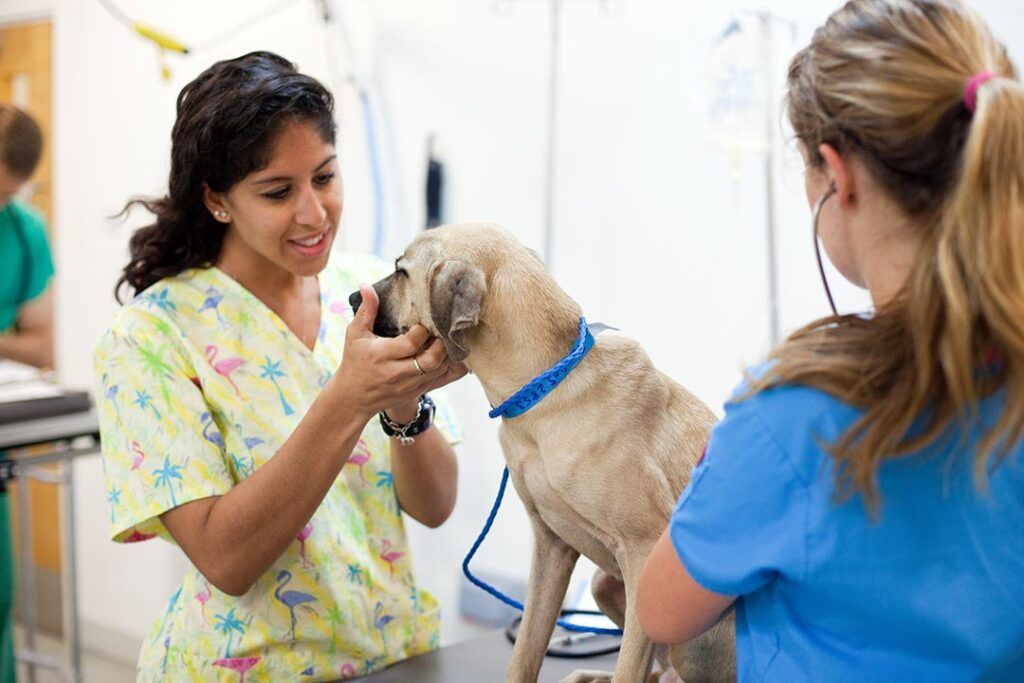
From admissions and academic requirements to clinical training and licensure, this FAQ covers what prospective veterinary students want to know.
How long does the admission process take?
Your admission counselor will contact you to confirm receipt of an application and fee and will let you if you are missing any documents to complete your application. A determination of a possible interview will take place within two weeks of when your application and supporting documents are all verified. After the interview, your admissions counselor will send you an updated regarding the timeframe as to when you will receive your determination.
Are there specific forms that are needed for the letters of recommendations?
No, the letters should speak to one’s academic ability, sense of community and team work spirit. A minimum of two individual or one committee letter is required and we prefer that the letters come from science professors. For those applying to the School of Veterinary Medicine, one of the letters of recommendations must be from a veterinarian with whom you have worked.
Does St. George’s University accept letters that are sent through Interfolio, Docufied, or Virtual Eval?
Yes, we subscribe to these services. To take advantage of these services, please speak with your undergraduate institutions.
Where are the interviews conducted? Do I have to travel to Grenada for the interview?
Interviews are conducted by trained graduates from the School of Veterinary Medicine (SVM) who utilize a virtual platform to accommodate students from all corners of the world. While it is not necessary to travel to Grenada for an interview, we strongly encourage prospective students to take the opportunity and explore our campus and facilities.
How do we calculate repeated courses? If I retake a class, is the GPA averaged or is there “Grade Forgiveness”?
If the class is repeated at the same institution, or at a sister institution with the same course number, the grade of the prior attempt is forgiven. If you resit the class at another institution we do not allow for grade forgiveness.
How do you calculate your science GPA? Are math courses included?
Yes, math courses are included. Science GPA is calculated using biology, chemistry, physics and math courses.
Is the GRE Required?
No, the Graduate Records Examination (GRE) is not required for admission.
What are the average overall and science GPA?
The average cumulative GPA is a 3.4 and the average Science GPA is 3.3. These are our averages, we do not have minimums. The Faculty Student Selection Committee also takes into consideration students who maintained jobs and/or extra-curricular activities which may have affected their grades.
Is a bachelor’s degree required?
It is preferred that North American applicants to the four year program have a bachelors degree or the equivalent, but Faculty Student Selection Committee will consider applicants with an exceptional background who have 60 or more credit hours – including the necessary science prerequisites.
Are you approved in Canada?
Yes, we are AVMA/CVA accredited. AVMA accreditation includes accreditation by the Canadian Veterinary Association.
Are you approved in all 50 states?
Yes, we are AVMA accredited.
Is St. George’s University accredited?
The School of Veterinary Medicine is accredited by the American Veterinary Medical Association Council on Education (AVMA COE) in the United States and Canada.
What is SGU’s School of Veterinary Medicine student loan default rate?
0.0%1
1) *The US Title IV federal student aid cohort default rate is the percentage of a school’s US Title IV eligible borrowers who enter repayment during a particular federal fiscal year and default on their federal student aid obligations. SGU students who are US citizens or permanent residents and are enrolled in the 4-year veterinary medical degree program are eligible to receive US federal aid. ≈ Most recent data available at Official Cohort Default Rates for Schools. The default rate for schools participating in US federal loan programs is inclusive of all eligible federal aid programs at such institutions (undergraduate, certificate, graduate, and professional). SGU’s School of Veterinary Medicine cohort default rate represents its 4-year veterinary medical degree program
What is SGU’s School of Veterinary Medicine graduation rate?
SGU’s School of Veterinary Medicine graduation rate is 87% for all students who began in 2019.1
1) Completed the Doctor of Veterinary Medicine (DVM) program to date.
What is the application fee?
The application fee for the School of Veterinary Medicine is US $50 made payable to University Support Services, LLC.
Where do I send all my admission documents?
Applicants need to submit all official transcripts electronically to vetadmission@sgu.edu. Additionally, all letters of recommendation and supporting materials should be sent to the same email address in either PDF or Word Doc format.
Are there any additional exams required to practice in the US/Canada?
No, being AVMA/CVA accredited our graduates are only required to sit the NAVLE, and the specific state/provincial licensing exam, in the state/province they want to practice in. The examination process is the same as all the graduates from US/Canadian veterinary schools.
How do I get into SGU School of Veterinary Medicine?
To get into SGU School of Veterinary Medicine, you need to meet the DVM admissions requirements and show readiness for rigorous veterinary training. SGU reviews academic preparation, animal and veterinary experience, recommendations, and other factors that help demonstrate your potential.
What is SGU’s NAVLE pass rate?
SGU reports NAVLE outcomes for its School of Veterinary Medicine, and prospective students should review the most current data available from SGU. Because pass rates are updated over time, admissions can help confirm the latest NAVLE performance information.
Do SGU veterinary students take the NAVLE?
Yes. SGU veterinary students preparing to practice in North America typically take the NAVLE as part of the licensure process. Passing the NAVLE is an important step, but graduates must also meet any additional licensing requirements for the state, province, or country where they plan to practice.
What is the NAVLE?
The NAVLE, or North American Veterinary Licensing Examination, is a key licensing exam for veterinarians in the United States and Canada. DVM students usually take the NAVLE near the end of veterinary school as part of the process toward veterinary licensure.
Can SGU veterinary students complete clinical training in the US?
Yes. SGU veterinary students may complete clinical training through affiliated institutions, including opportunities connected to US veterinary education pathways. Because sites, eligibility, and placement logistics can vary, students should confirm current clinical year options with SGU.
Where do SGU veterinary students complete clinical training?
SGU veterinary students complete clinical training through the DVM curriculum and affiliated clinical year sites. Clinical placement details depend on program requirements, site availability, eligibility, and academic progress, so students should work closely with SGU advisors when planning their clinical year.
Does SGU provide support for veterinary students?
Yes. SGU provides student support resources for veterinary students, including academic guidance, faculty support, wellness resources, and professional development. These services are designed to help students manage the demands of veterinary school and prepare for clinical training and licensure.
How does the clinical year work for SGU veterinary students?
SGU veterinary students complete their final clinical year through affiliated clinical training opportunities, often at AVMA-accredited partner institutions. During the clinical year, students apply classroom and laboratory learning in real-world veterinary settings under supervision.
What do students study in SGU’s veterinary program?
SGU veterinary students study the scientific, clinical, and professional foundations needed for veterinary practice. Coursework builds from core biomedical and animal health sciences into hands-on clinical preparation, helping students develop the knowledge and judgment required for patient care.
How long is SGU’s DVM program?
SGU’s DVM program follows a veterinary curriculum that includes preclinical training and a final clinical year. Program length can depend on the student’s entry point and academic progress, so applicants should review the current DVM curriculum structure for exact timing.
When should I apply to SGU’s DVM program?
You should apply to SGU’s DVM program once your academic records, recommendations, experience, and application materials are ready. Applying early can give you more time to complete requirements, prepare for enrollment, and plan finances, travel, housing, and student visa needs.
Does SGU have rolling admissions for veterinary school?
SGU’s veterinary admissions process supports review for upcoming start terms, but deadlines and seat availability can vary. Prospective DVM students should confirm current admissions timelines and recommended application timing directly with SGU.
Does SGU School of Veterinary Medicine require the GRE?
SGU’s GRE requirements can vary by admissions policy and applicant situation, so students should confirm current testing requirements before applying. If a GRE score is optional or not required for a given applicant, other parts of the application remain important.
How much animal experience do I need for SGU veterinary school?
SGU values animal and veterinary experience because it helps show commitment to the profession and understanding of the field. The strongest applicants can explain what they learned from hands-on experience, shadowing, volunteering, research, work, or other animal-related activities.
What are the requirements for SGU’s DVM program?
SGU’s DVM requirements typically include prerequisite coursework, transcripts, letters of recommendation, and evidence of academic and professional readiness. Requirements can vary by applicant background, so prospective veterinary students should review the current admissions criteria before applying.
What careers can SGU DVM graduates pursue?
SGU DVM graduates can pursue veterinary careers in areas such as companion animal practice, mixed animal practice, public health, research, industry, government, and specialty training. Career options depend on licensure, professional interests, clinical experience, and any additional postgraduate training.
Does SGU offer scholarships for veterinary students?
SGU offers scholarship opportunities for eligible veterinary students, but award availability, criteria, and amounts can change. Applicants should review current scholarship information and speak with admissions or financial aid to understand which options may apply.
How much does SGU School of Veterinary Medicine cost?
The cost of SGU School of Veterinary Medicine depends on the term, tuition schedule, fees, and personal expenses such as housing, travel, supplies, insurance, and clinical year costs. Students should review the current DVM tuition and fees page for the most accurate information.
What is the difference between AVMA accreditation and ECFVG or PAVE?
AVMA accreditation applies to veterinary schools and programs. ECFVG and PAVE are pathways often used by graduates of non-accredited veterinary schools to demonstrate educational equivalency. Students at an AVMA-accredited DVM program generally follow the accredited-program licensing pathway, though local requirements still apply.
What does AVMA accreditation mean for SGU veterinary students?
AVMA accreditation means SGU’s DVM program has met standards established by the American Veterinary Medical Association Council on Education. For students, this can support a clearer pathway toward NAVLE eligibility and licensure steps in the United States and Canada.
Is SGU School of Veterinary Medicine accredited?
Yes. SGU School of Veterinary Medicine is accredited by the American Veterinary Medical Association Council on Education. This accreditation is important because it places SGU’s DVM program within the recognized accreditation pathway for veterinary education.
Can SGU veterinary graduates practice in the US or Canada?
SGU veterinary graduates can pursue veterinary licensure in the United States or Canada if they meet the licensing requirements for the jurisdiction where they plan to practice. Requirements can include graduation from an accredited program, NAVLE results, and state or provincial steps.
Get in Touch
Contact admissions with your specific questions
Thank you for your interest in St. George’s University. We look forward to speaking with you and answering any questions you may have. Please fill out the form for the school of your choice, and a current student or St. George’s University representative will follow up with you.