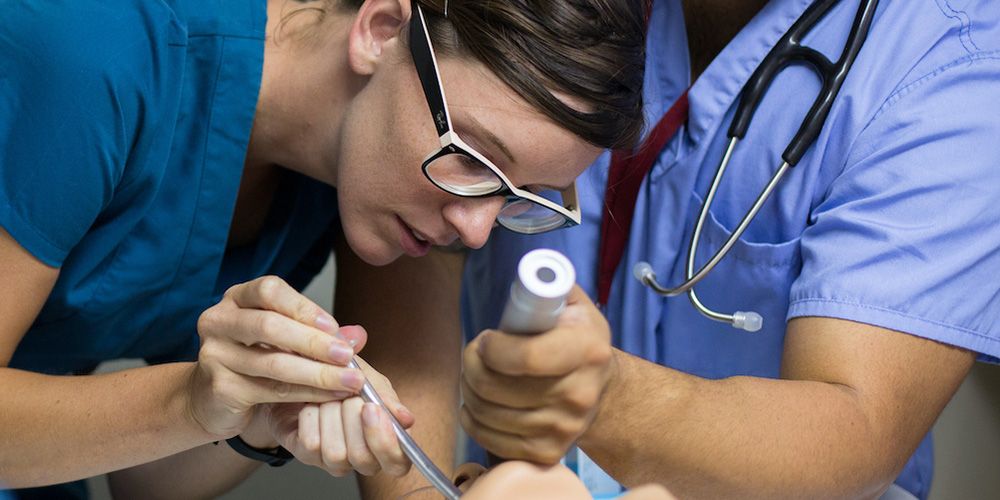
When the time comes for a medical student to choose a specialty, it can feel like you’ve come to a fork in the road. Go left, and you can embark on a career path marked by long-term relationships you’ve built with your patients over time. Go right, and your career is one that requires you to often make life-altering decisions in minutes during a crisis, and then quickly move on to the next chaotic situation. So which way will you go?
The right turn to emergency medicine
If the prospect of “going right at the fork” to where the action is sparks something within you, then the path of an emergency medicine (EM) physician could be your calling. The emergency medicine specialty is dedicated to the diagnosis and treatment of unforeseen injury and illness for adult and pediatric patients. It requires composure, decisiveness, and a relentless drive to help anyone experiencing a medical emergency, at any hour.
“I realized I needed variety,” says Dr. Ninad Desai, a 2019 St. George’s School of Medicine graduate who is now an attending physician in emergency medicine in New York City. “I needed a little bit of action.”
Dr. Desai found that action by experiencing emergency medicine in different environments.
“I had a couple of weeks dedicated to the pediatric emergency department. Same thing when I was on my psych rotation—I went to the psych emergency department,” he says. “When I was in internal medicine—again, same thing: emergency department. And that’s how I discovered my love for the emergency department because everything led to emergency medicine.”
Defining emergency medicine
The people coming to an emergency department (ED), or as it is also known by some, emergency room (ER), have a broad range of injuries and conditions. Those can range from a child with a sports injury like a broken thumb, to a person in a serious car accident, and everything in between. Because of this, an emergency medicine physician is the ultimate medical generalist, which includes being a diagnostician, trauma expert, and a proceduralist.
As the first line of defense for incoming patients, EM doctors are trained to assess, evaluate and manage urgent and acute injuries and sickness for patients of all ages. The steps look something like this:
- Triage: quickly assess and prioritize patients based on the severity of their condition
- Stabilize patients as needed
- Initiate treatment
- Make recommendations for next steps
Variety is the spice of emergency medicine
Regardless of whether this process culminates in surgery, being admitted to the hospital, or being discharged, there’s a high likelihood it all happened in a vacuum. That’s par for the course, and why emergency medicine is exhilarating, challenging, and for the right person, empowering.
“You never know what you’re going to get. You see young patients, you see old patients…from every walk of life, every background. I love it,” says Dr. Jessica Best, who graduated from SGU in 2012 and is currently an emergency medicine physician in San Marcos, TX.
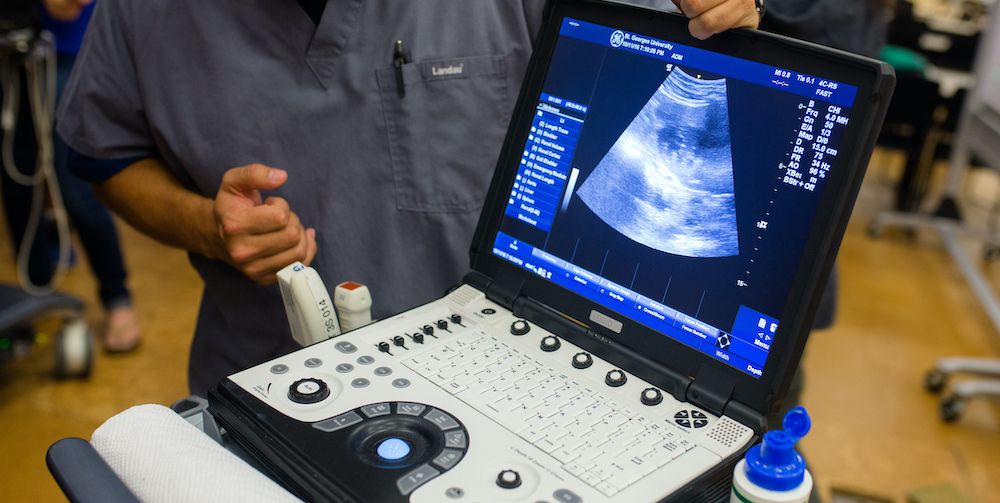
An emergency medicine career: Pros and cons
While highly demanding, emergency medicine also can be highly rewarding. For many physicians, the high-stakes environment and need for quick thinking are what make it appealing. For others, those same factors point them towards a different specialty. Consider the following breakdown of pros and cons of a career in emergency medicine:
The advantages: Variety, stability, and impact
Pros |
Why it matters to your career |
|---|---|
Ultimate variety (the generalist role) |
Your environment is predictably unpredictable, so you sharpen your skills across all medical disciplines. This variety keeps your work from being redundant, which can be the norm in other specialties. |
Exceptional job stability and demand |
Job security isn’t normally an issue in emergency medicine, as any hospital or community tends to have high demand for EM physicians. To that end, salaries tend to be competitive, with annual salaries often falling between $300,000 and $375,000 generally in the US. |
High-impact, immediate results |
Emergency medicine focuses on acute, life-saving interventions. The ability to stabilize a critically ill patient quickly allows you to have an immediate impact on a person’s life, leading to great professional fulfillment. |
Unique scheduling flexibility |
Intense and immersive as working in the emergency department can be, you don’t take work home with you and you usually aren’t responsible for a patient’s care after they’ve been admitted to the hospital. Time off tends to come in blocks of consecutive days. |
The disadvantages: Stress and lifestyle factors
Cons |
Potential impact on an EM physician’s life |
|---|---|
High risk of burnout |
This is the most common concern: the high-stress decisions, exposure to trauma, and management of a high volume of patients—all for eight to 12 hours straight—can be emotionally and physically exhausting. There are physician wellness programs that can help, but many EM physicians report symptoms of burnout. |
Stressful and chaotic work environment |
Due to the unpredictable environment in an emergency department, the ability to make critical, complex decisions fast with limited patient history or data to work from is a necessity. The constant pressure is not sustainable for everyone. |
Practice settings: From urban trauma to rural versatility
Choosing a specialty is a major decision, and having a clear, balanced view of the working environment is important, especially when it comes to EM shifts, which vary dramatically. Take urban and academic center environments: high volume and high acuity define these settings. Subspecialists and advanced imaging are readily available, allowing you to focus on rapid stabilization, diagnosis, and handing off patients to the appropriate inpatient team.
Rural and community hospitals tend to be different. The pace is often slower, but the responsibility is broader. You may be the only physician in-house overnight, handling everything from obstetrics to major trauma with limited resources. Remote consultations are common, and independence is essential. Emergency medicine here feels like practicing with a variety of skills.
Collaboration: The ED as the hospital’s hub
As the hospital’s front door, the ED relies on crisp communication and teamwork. Collaboration with others in the department, as well as those working in other parts of the hospital, is a necessary aspect of an emergency medicine doctor’s role.
Within the ED: You coordinate closely with nurses, technicians, physician assistants, and nurse practitioners. The EM physician serves as the “captain,” directing care across multiple simultaneous emergencies—perhaps a trauma activation and a stroke alert arriving back-to-back.
Across the hospital: You frequently communicate with hospitalists and specialists to determine admissions and consults. Tools like SBAR (Situation, Background, Assessment, Recommendation), a healthcare communication technique used to help ensure smooth, safe transitions of care, are commonly used.
“We deal with everyone in the hospital from administration to transportation to radiology, internal medicine, psych, OB for all the consults,” says Dr. Desai. “It involves a lot of talking to other folks. So I literally do everything at all times and the hardest part is learning how to balance it.”
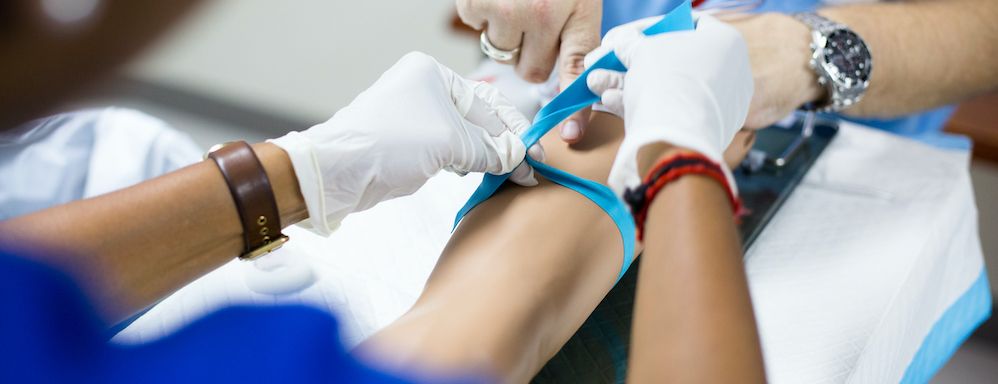
Your path to the ED: Applying for residency
As you consider the many medical specialties for students, the road to becoming an EM physician is competitive, but manageable if you’re committed. Pursuing a residency in emergency medicine is one of the most direct paths to becoming an EM physician. An EM residency typically lasts three to four years following medical school. This training is fast-paced, rigorous, and focuses on hands-on procedures and critical care decision-making.
When you begin the residency application process, you’ll be using resources like the Electronic Residency Application Service (ERAS), managed by the Association of American Medical Colleges (AAMC). The AAMC provides extensive data to help applicants understand trends, explore programs, and identify those that align with your professional goals.
Bearing all that in mind, relationships you make along the way can prove to be invaluable. Dr. Best touched on the importance of relationships, saying, “If you do very well in your rotations and the faculty members really enjoyed having you and they thought you worked really hard, that is definitely going to work to your advantage.”
Medical specialties for students and the future of EM
With an aging US population, among medical specialties for students, the future of emergency medicine remains crucial. The demand for immediate and acute care services is projected to continue growing, which should ensure a consistently high demand for EM physicians.
EM physician job outlook
- Compensation: From a financial standpoint, the outlook is strong. The average annual salary for emergency medicine physicians typically ranges from $307,000 to $374,000, depending on your location, employment type, and experience, according to data compiled from the Bureau of Labor Statistics and compensation reports.
- Job market: The EM physician workforce is essential. The work you do is literally non-negotiable for a functioning healthcare system, giving the specialty an inherent job market stability.
- A future-focused specialty: Recent decades have underscored the irreplaceable role of EM physicians. Looking ahead, this specialty will continue to be essential in innovating disaster preparedness, incorporating telehealth into triage, and championing policies that address systemic issues like hospital overcrowding. The skills you gain—rapid assessment, versatility, and crisis management—will forever be in demand.
Become an emergency medicine doctor: Resources and next steps
Ready to take the plunge into the emergency medicine specialty? Explore the field directly through the leading professional organizations outlined below:
American College of Emergency Physicians (ACEP)
AAMC Data for Residency Applicants
To learn more about your journey to being a medical doctor specializing in emergency medicine or any other specialty, check out SGU’s “Journey to MD” series.
FAQs
What are the average salaries for emergency medicine physicians in the US?
The average annual salary for Emergency Medicine physicians typically ranges from $307,000 to $374,000.
How many years is an emergency medicine residency?
An emergency medicine residency is typically 3-4 years in length, depending on the program.
Can I sub-specialize after emergency medicine (i.e., pediatric EM, toxicology, EMS)?
Yes, once a doctor has completed an emergency medicine residency, they can sub-specialize by completing an accredited fellowship program.
Among medical specialties for students, how competitive is matching into emergency medicine residency?
An emergency medicine (EM) residency is generally considered to be highly competitive for medical students. The level of competition can vary based on factors including academic performance, extracurricular activities, and the programs you’re applying to. To maximize your chances for success, focus on strong clinical performance, high USMLE scores, meaningful extracurriculars, and strong letters of recommendation from EM professionals.
Do I need research publications to match into EM?
No, published research is not required to match into EM, but it can help.
Can a physician practicing EM specialize in global health or rural medicine?
Yes, a physician practicing EM can specialize in global health or rural medicine.
Learn more about emergency medicine and how to become an emergency medicine doctor
The road to becoming an EM physician is competitive, but manageable. EM residency typically lasts three to four years after medical school. This training is rigorous and fast-paced, focusing heavily on hands-on procedures and critical care decision-making.
This article has been updated from August 2020 to include current facts and figures.