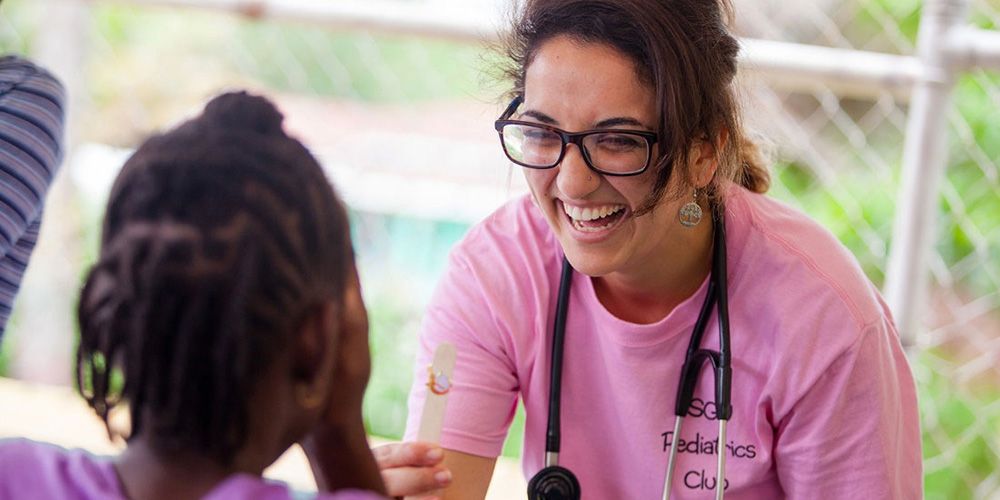
Pediatricians are doctors who care for infants, children, and adolescents, making pediatrics a natural fit for anyone interested in medicine and passionate about supporting young patients.
These physicians develop expertise in a wide range of diseases and conditions to provide comprehensive medical care to infants, children, adolescents, and young adults. Pediatric doctors play an important role in the health and well-being of these patients by preventing, detecting, and managing physical, behavioral, and developmental issues.
There’s a lot that goes into working in this primary care specialty, so we’ve provided answers to some frequently asked questions about working as a pediatrician:
What is a pediatrician?
Pediatricians are focused on prevention, detection, and management of physical, behavioral, developmental, and social problems that affect young patients. Pediatric care typically begins at birth and continues through adolescence, often extending into early adulthood.
You can think of pediatricians as “internists for children.” Like internists, they must understand a wide range of organ systems and conditions, but with the added complexity of growth and development.
In addition to their medical training, pediatricians must be highly perceptive and detail-oriented. Because young patients may not always be able to clearly describe their symptoms, pediatricians rely on careful observation, communication, and clinical judgment to provide effective care.
RELATED: How to become a pediatrician, in 7 steps
How much do pediatricians make?
There are currently more than 42,200 pediatricians employed across the nation, with new positions opening up each year, according to the U.S. Department of Labor. Most pediatricians work routine hours in hospitals and clinics, although those in emergency or intensive care settings may have more demanding schedules. A pediatrician’s salary can vary depending on specialization, but national data indicates that the median annual salary for pediatric doctors in 2025 was $210,0400.
How long does it take to become a pediatric doctor?
To become a pediatrician, you must first earn a bachelor’s degree before completing a four-year Doctor of Medicine (MD) program at an accredited medical school. You’ll then complete a pediatric residency program, which typically takes about three years.
Pediatricians who choose to specialize further may complete a fellowship program, which can require an additional two to six years of training depending on the specialty.
All in all, the process of becoming a pediatrician — from undergraduate education through residency — typically takes around 11 years. Additional fellowship training may extend that timeline.
What does a pediatrician do day-to-day?
The goal of a pediatrician is to support healthy development and improve long-term health outcomes for children. A pediatrician’s day-to-day responsibilities may include:
- Performing regular health and wellness checkups
- Conducting physical exams
- Tracking a child’s physical, emotional, and social development
- Diagnosing and treating illnesses, injuries, and other health conditions
- Administering vaccines
- Prescribing medication
- Referring patients to specialists as needed
- Providing education and guidance to parents and caregivers
What types of pediatricians are there?
Some pediatricians work in general practice, while others specialize in treating children with specific health conditions. Pediatric generalists, like general internists, maintain a broad understanding of many body systems and health conditions, while pediatric specialists focus on a particular area of care. Common pediatric subspecialties include:
- Hematology/oncology
- Cardiology
- Gastroenterology
- Rheumatology
- Endocrinology
- Neonatology
- Emergency medicine
- Intensive care
- Pulmonology
- Nephrology
- Infectious diseases
- Sports medicine
Where do pediatricians work?
Pediatricians work in both inpatient and outpatient settings. Pediatric hospitalists care for patients who are admitted to the hospital, treating conditions such as infections, neonatal complications, and metabolic disorder. Outpatient pediatricians typically work in clinical settings, providing routine checkups, administering vaccines, and treating common conditions like asthma, allergies, eczema, and ADHD.
Is a career in pediatrics right for you?
If you’re drawn to the idea of supporting children’s health and development, pediatrics can be a deeply fulfilling medical specialty.Still curious whether this career path is right for you? Our resource “8 Signs You’re Perfectly Suited to Become a Pediatrician” was designed to help you answer that very question.