For many aspiring physicians, entering a program as a nontraditional medical student can feel intimidating. You may have already established yourself in another profession but spent years wondering whether a career change to medicine is still possible, or whether you have missed your opportunity.
There is no single path to becoming a physician. Students enter medical school after careers in a variety of fields such as television, aviation, education, healthcare, business, technology, and more. Rather than leaving those experiences behind, aspiring doctors can bring the skills, perspective, and sense of purpose they developed throughout their previous careers into medicine.
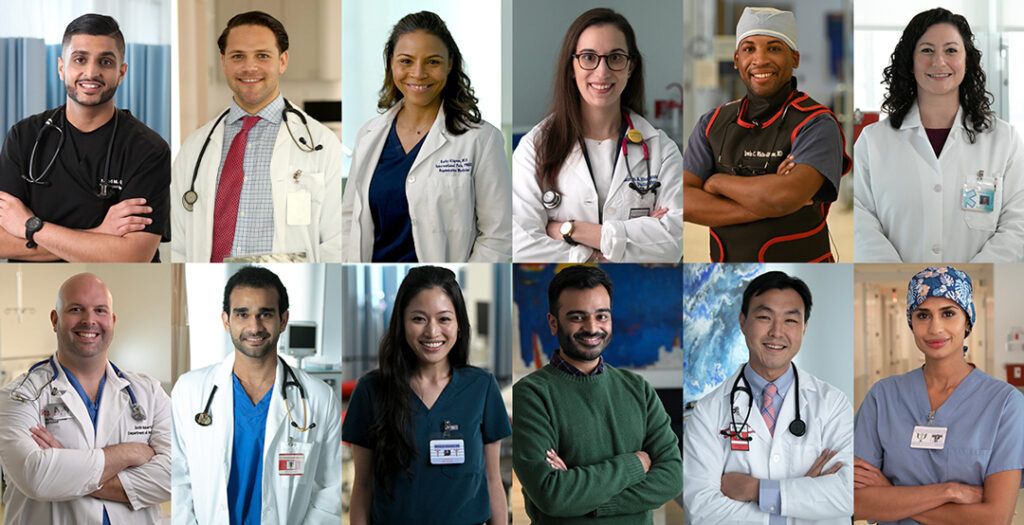
These four St. George’s University (SGU) alumni entered medical school through different paths. Their stories show how previous professional experience helped shape the physicians they later became.
From physician assistant to physician: Dr. Christin Giordano
Medicine was already central to Dr. Christin Giordano’s professional life before she entered medical school. As a physician assistant, she cared for patients, developed clinical experience, and worked closely with other healthcare professionals. Over time, however, she realized she wanted to take on a broader role in patient care and medical decision-making.
Rather than viewing her established career as a reason to remain where she was, she saw it as the foundation for her next chapter.
Returning to school meant stepping away from an established profession and committing to additional years of education and training. Dr. Giordano understood the scale of that decision and encourages other prospective career changers to consider it carefully.
At SGU, she built on the foundation of clinical knowledge and patient-care experience she had already developed. Her previous work also gave her familiarity with healthcare teams and the responsibilities involved in caring for patients.
“I would say that you should be 120 percent sure this is what you want to do with your life,” Dr. Giordano said.
Dr. Giordano acknowledges the path requires commitment, but she considers the outcome worth the work.
“It is not an easy road, but it is completely worth it,” Dr. Giordano said.
Her journey demonstrates that even professionals who already work in healthcare may discover that their goals continue to evolve.
From television producer to dermatologist: Dr. Benjamin Kahn
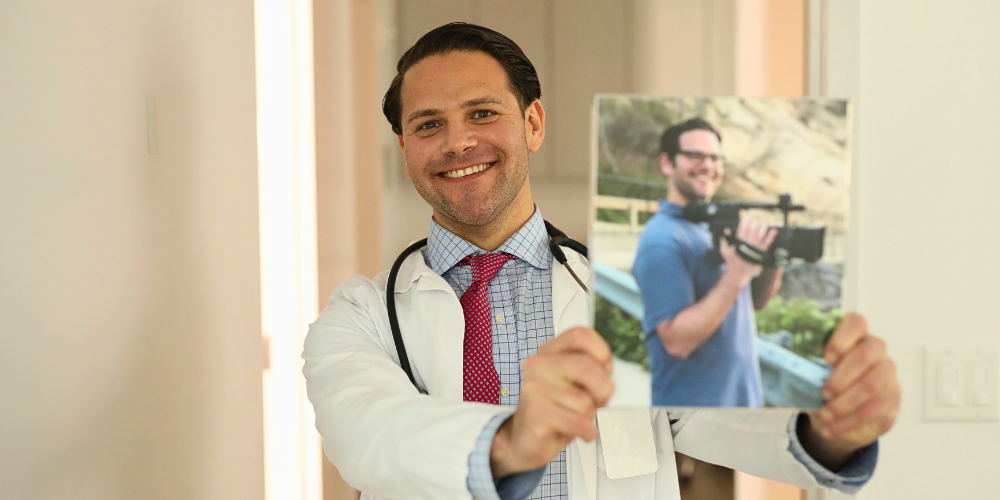
Before entering medicine, Dr. Benjamin Kahn built an Emmy Award-winning career in television production. His direction changed following a surgery and hospital stay, during which he developed a relationship with his physician and asked to shadow him.
That experience introduced him to a form of work he had not encountered in television.
“It lit a fire in my belly,” Dr. Kahn said.
Television allowed Dr. Kahn to tell compelling stories, but he says medicine offered him the opportunity to affect another person’s life directly.
After deciding to pursue a career change to medicine, Dr. Kahn completed the prerequisite science coursework he needed and enrolled at SGU at age 30.
The academic transition challenged him. Through SGU’s academic support resources, he worked to develop study strategies suited to the demands of medical school.
“It was not easy,” Dr. Kahn said. “I really had to work for it. In the end, I just feel so blessed to have been given the opportunity to become a doctor, and the confidence and the tools that I need to succeed.”
Today, Dr. Kahn practices dermatology in Georgia, a career he says allows him to make the meaningful difference he had been searching for.
From air force pilot to obstetrician-gynecologist and surgical intensivist: Dr. Cholene Espinoza
By the time Dr. Cholene Espinoza considered medical school, she had already built several demanding careers.
She served as a pilot in the U.S. Air Force, later worked as a commercial airline pilot, and then covered the Iraq War as an embedded journalist following September 11.
While observing military medical professionals care for wounded service members, she began to reconsider where she wanted to direct her own service. At age 45, she decided to pursue medicine. The transition required her to embrace a new learning environment and commit to years of medical education and training.
“Residency training and making this switch has been the biggest challenge of my lifetime but really the privilege of a lifetime,” Dr. Espinoza said.
Today, Dr. Espinoza practices as an obstetrician-gynecologist and surgical intensivist at Cleveland Clinic, where she cares for patients facing complex and critical medical needs.
Her advice speaks directly to aspiring physicians who worry that their route to medicine has not followed a traditional timeline.
“You do not have to be perfect or go in a certain path or have perfect timing,” Dr. Espinoza said. “I think setbacks are temporary, and they certainly made me a better physician and a better human being.”
From medical device technology to internal medicine: Dr. David Townsend
Growing up in a family of physicians, Dr. David Townsend was familiar with the medical profession but initially chose a career in medical device technology.
His work with cardiac pacemakers and defibrillators gave him insight into medical innovation and the role technology plays in patient care. Over time, however, he found himself drawn toward working with patients more directly. He wanted not only to support the use of lifesaving devices, but also to help patients understand and navigate their healthcare decisions.
His career change affected his entire family. Dr. Townsend, his wife, and their children relocated to Grenada while he attended SGU.
That experience reflects a reality many career changers face: Pursuing medicine may require shared decisions, family support, and significant changes outside the classroom. Today, Dr. Townsend practices internal medicine.
“I am so glad I made the career change to become a physician and attend SGU,” Dr. Townsend said.
He also encourages other career changers to consider how their existing skills and experiences could support their transition into medicine.
A different beginning does not mean a different destination
These physicians came to medicine from very different professions, but their stories all share several common themes. None followed a single prescribed timeline. Each had to decide whether leaving an established career was worth the personal, academic, and professional commitment medical training requires.
Their previous careers also gave them experiences they could carry into medicine. Skills like communication, leadership, discipline, teamwork, resilience, and empathy do not disappear when changing professions. Rather, they can influence how a future physician studies, collaborates with colleagues, approaches challenges, and connects with patients.
Previous professional experience can give applicants meaningful examples to discuss throughout the application process. Medical schools consider factors such as academic preparation, experiences, motivation, personal attributes, and readiness for medical education, not simply whether an applicant followed a direct path from college to medical school.
If you are still deciding when to move forward, explore the cost of waiting to apply to medical school and whether it is too late to become a doctor.
Frequently Asked Questions
What is a nontraditional medical student?
A nontraditional medical student is generally someone whose route to medical school differs from the direct path of undergraduate education to medical school. This may include applicants who have worked in another profession, completed prerequisite coursework later, took time away from school, or applied at a later stage in life.
Can you become a doctor as a second career?
Yes. Medical students come from a wide range of professional backgrounds that include healthcare, business, education, engineering, technology, aviation, the military, and many other fields.
Applicants pursuing medicine as a second career must still meet the academic and application requirements of the medical schools they are considering. Their previous work may also give them relevant experiences involving communication, leadership, service, teamwork, and problem-solving.
Is there an age limit to starting medical school as a career changer?
Medical schools do not generally establish a universal maximum age for beginning medical education. Applicants should consider the length of medical school and residency training, their academic preparation, finances, family responsibilities, personal goals, and the requirements of each institution.
What does a career change to medicine actually involve?
A career change to medicine may involve completing outstanding prerequisite coursework, preparing for and taking the MCAT when required, gaining relevant clinical exposure, requesting letters of recommendation, and completing the medical school application process.
The specific path depends on an applicant’s previous education, professional experience, and the requirements of the medical schools under consideration.
Do medical schools value experience from another profession?
Professional experience can provide applicants with examples of leadership, communication, collaboration, service, resilience, and problem-solving. Applicants should explain how those experiences contributed to their decision to pursue medicine and prepared them for the responsibilities of medical education.
Your previous career can become part of your medical journey
Changing careers requires commitment, particularly when the new path includes medical school and residency training. But as these SGU alumni demonstrate, there is no single timeline for becoming a physician.
Whether your previous career was in healthcare, television, aviation, technology, or another field, the skills and perspective you have developed can continue to shape how you learn, lead, and care for patients.
Explore SGU’s Why Wait opportunity to learn more about taking the next step toward medical school.