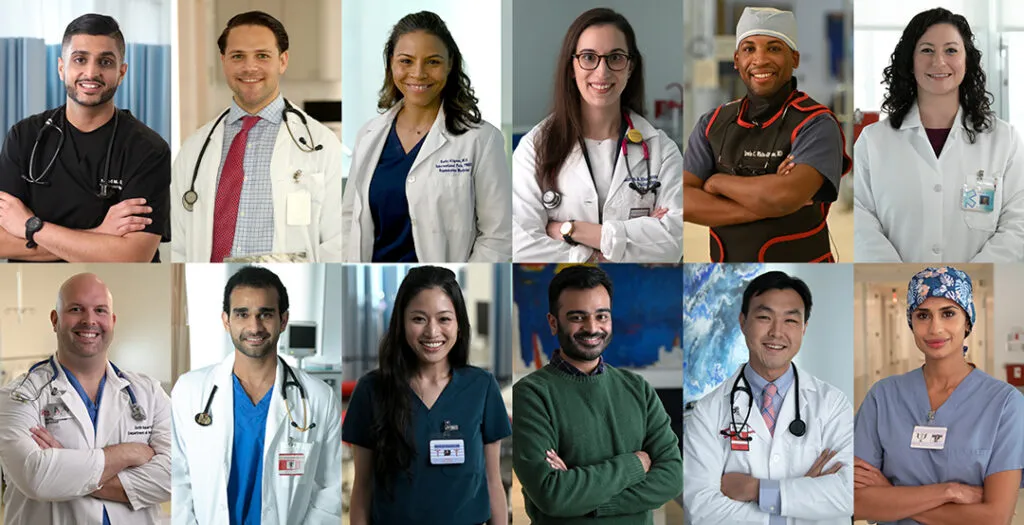
There is more than one pathway to becoming a physician. If you are a nontraditional applicant, you may be entering medical school after changing careers, spending several years in the workforce, taking multiple gap years, working in healthcare, or earning a non-science undergraduate degree.
As a nontraditional applicant, you bring valuable experience and a unique perspective to medical school. But, you may also have specific questions as you explore different programs. Will your previous experience matter? Do you need to take additional science coursework? What support is available when you begin medical school? And how will the school you select prepare you for clinical training and residency?
For career changers and other applicants taking a less traditional route, choosing a medical school means focusing on institutions with holistic medical school admission processes that value life and professional experience as well as academic readiness. St. George’s University (SGU)’s holistic approach to admissions is particularly relevant to applicants taking a less traditional path to medicine.
Key takeaways for nontraditional medical students
If you’re applying to medical school as a nontraditional student, keep the following in mind:
- Nontraditional medical students often bring professional experience, maturity, leadership, communication skills, and a clearer understanding of why they want to practice medicine.
- Applicants can look into whether a school evaluates academic preparation alongside experiences and attributes rather than viewing an older academic record in isolation.
- Career changers may find it useful to compare their completed coursework with each school’s current prerequisites and determine whether additional preparation is necessary.
- Academic support, clinical training, residency preparation, outcomes, and flexibility can be just as important as admission requirements when comparing schools.
- SGU offers several features that may be relevant to applicants pursuing medicine after another career or academic path.
What is a nontraditional medical student?
There is no universal definition of a nontraditional medical student. Generally, the term describes someone whose educational or professional journey differs from the conventional path directly from college into medical school.
A nontraditional applicant might be:
- Changing careers after several years in another profession.
- A nurse, physician assistant, EMT, researcher, or other healthcare professional pursuing an MD.
- Returning to science coursework after several years away from school.
- Applying after multiple gap years.
- Entering medicine with an undergraduate degree outside of the sciences.
Taking a nontraditional path to medical school does not define your readiness. In fact, you may bring professional maturity, established work habits, leadership experience, communication skills, patient-facing experience, and a more developed understanding of why you want to become a physician.
If you’re considering becoming a doctor later in life, the key is understanding how your previous experiences fit into the academic and professional expectations of medical school.
What should nontraditional medical students look for in a medical school?
As a nontraditional student considering medical school, you may want to look at holistic admissions, prerequisite and academic pathways, support during the transition to school, clinical opportunities, residency preparation and outcomes, and flexibility around when you can begin.
It can be helpful to evaluate the entire path from admission through residency.
Look for a holistic medical school admissions process that values your full experience
If you’ve spent years building a career, an undergraduate transcript may represent only one part of a much longer academic and professional story. A holistic medical school admissions process considers your academic preparation alongside other relevant experiences and attributes. In other words, holistic medical school admission means evaluating the whole applicant rather than relying on a single metric or isolated part of an application.
Depending on the school, factors may include academic performance, MCAT results where applicable, healthcare and professional experience, leadership, service, personal experiences, motivation for medicine, and evidence of recent academic readiness.
If you are a career changer, be prepared to demonstrate that you can handle the academic demands of medical school, and explain why you’re pursuing medical school at that point in your life. Previous professional experience does not replace prerequisite coursework or other admission requirements. Instead, it can provide context and demonstrate transferable skills.
SGU’s holistic approach to admission
At SGU, the Committee for Admission considers applicants individually, looking at academic strengths as well as experiences and attributes. In considering applications, admissions prioritize academic achievement, motivation for medicine, communication and teamwork, critical thinking, adaptability, and a commitment to lifelong learning.
This approach gives you the opportunity to explain the experiences that shaped your decision to pursue medicine and how your journey has prepared you for medical school.
Understand your prerequisites and the pathways available to complete them
One practical question for career changers is whether their previous education satisfies medical school prerequisites. Someone who earned a degree years ago – or majored in business, communications, humanities, or another non-science field – may need additional coursework. The best approach is to compare your transcript with the current requirements at each medical school you are considering.
If you’re missing some required prerequisites, you might consider taking those individual prerequisites individually, completing formal or informal postbaccalaureate coursework, or pursuing another appropriate academic preparation program. The right option depends on what you have already completed and what your target schools require.
Academic pathways at SGU
SGU offers several MD entry points and tracks, and evaluates students based on both academic and life experience. Our four-year MD program is complemented by five-, six-, and seven-year tracks designed for students from different educational backgrounds.
SGU also offers a 43-credit postbaccalaureate program designed for students with a bachelor’s degree, who have not yet completed the science prerequisites needed for medical school. The program can provide a structured route to completing prerequisite science coursework before entering the MD program.
If you are changing careers, you might wonder if a postbaccalaureate program is necessary before applying to medical school. The answer depends on your previous coursework and the requirements of the medical schools you are considering.
Review SGU’s MD program and admission requirements, or speak with the Office of Admission about your individual academic background.
Consider how a medical school will support your return to the classroom
If you are returning to school after years in the workforce, adjusting to academic life can take time, even if you have been successful professionally. You may be transitioning back to full-time study, relearning how to approach science courses, adapting to a structured academic schedule, or preparing for unfamiliar testing environments.
As you compare schools, be sure to familiarize yourself with the resources available for:
- Academic advising
- Learning and study strategies
- Faculty accessibility
- Small-group learning
- Peer support
- Wellness resources
- Licensing-examination preparation
Academic and student support at SGU
SGU provides support resources to all medical students, including its Department of Educational Services (DES), faculty and professional advisors, small-group learning, and the School of Medicine College system. DES can be a valuable resource if you are looking to strengthen your skills in areas such as time management, study techniques, test-taking, and note-taking.
The college system is designed to provide a more intimate community within the larger medical school, while small-group sessions give students opportunities for interactive learning and collaborative problem-solving.
For someone returning to academics after years in a professional setting, these resources can be particularly relevant as they develop new study routines and adjust to the pace of medical education.
Evaluate clinical training with your long-term career in mind
Medical school is more than the classroom. When evaluating schools, consider where clinical training takes place, the range of specialties and patient populations available, and how clinical experiences can help you identify potential career interests.
This can be particularly important if you are making a major career transition. Clinical experiences provide opportunities to test assumptions about specialties, healthcare environments, and the day-to-day work of physicians before committing to a residency path.
SGU’s clinical training network
SGU’s MD program moves from foundational Basic Sciences into clinical training, where students have access to more than 85 affiliated hospitals and health systems across the United States, the United Kingdom, and Canada, with clinical opportunities also available in Grenada.1 Bear in mind that core rotations cannot be completed in Canada.
Core clinical rotations include areas such as internal medicine, surgery, pediatrics, obstetrics and gynecology, psychiatry, and family medicine. You can then pursue electives and other clinical experiences aligned with your interests. Exposure to a variety of specialties and different clinical environments can be beneficial for students looking to make an informed decision about residency.
Look beyond admissions to residency preparation and outcomes
If you are making a significant professional and financial commitment to medical school, you may want to look beyond admissions. In the United States, residency is the postgraduate training stage that follows medical school, and is an essential step for medical students on their way to practicing as a physician.
As you compare schools, be sure to explore:
- Residency placement information
- USMLE preparation
- Career and specialty advising
- Residency application support
- Where graduates obtain residencies
- The specialties in which graduates train
Look carefully at definitions, dates, populations, and methodology to ensure a better understanding of the school.
SGU residency preparation and outcomes
SGU’s Office of Career Guidance provides support beginning during the basic science years and continuing through residency preparation. Resources address licensing examinations, specialty and residency selection, clinical timelines, and the residency application process.
On Match Day 2026, more than 800 SGU students and graduates secured first-year US residency positions, with matches spanning 23 specialties and 43 US states, plus the District of Columbia.2
The year before that, SGU reported more than 1,015 first-year US residency positions secured by students and graduates on Match Day 2025.
The Office of Career Guidance and Student Development can also assist with areas such as residency strategy, CV preparation, interviews, personal statements, and the application process.
Flexibility can be especially important when you are changing careers
Changing careers can involve more than submitting a medical school application. You may need to leave an existing job, complete prerequisites, prepare for the MCAT, manage family responsibilities, plan financially, relocate, or coordinate an application timeline around other commitments.
For that reason, having more than one opportunity to begin medical school can provide valuable planning flexibility.
SGU offers three medical school start dates
Multiple start dates provide maximum flexibility for nontraditional applicants transitioning into medical school. SGU offers three MD entry terms: January, April, and August. One term is not universally better than another. Instead, multiple start dates give you another factor to consider when coordinating academic preparation, finances, relocation, employment, and personal responsibilities.
If you are a career changer, you might find that one start date aligns better than another with regards to completing prerequisite coursework, getting the additional time needed to take the MCAT or transitioning out of a current profession.
Is SGU a good fit for a nontraditional medical student?
For someone exploring a career change, choosing a medical school means evaluating the complete journey – not just asking whether you can get admitted.
Consider whether a school offers a holistic medical school admissions process, an appropriate way to address prerequisite gaps, meaningful support during the transition back to intensive academics, substantial clinical opportunities, residency preparation and clearly defined outcomes, and flexibility around when you can begin.
SGU has educated students who arrive at medicine through many different routes. Its holistic admissions approach, academic pathways, student support resources, clinical network, residency-focused career guidance, and offer of three MD program start dates per year are factors that you will find beneficial to consider when evaluating your options.
Thinking about changing careers to medicine? Explore SGU’s School of Medicine admission requirements or request more information to learn which pathway best fits your academic background and goals.
- 85+ hospitals and health systems in the United States, Canada, and the United Kingdom offer clinical and ambulatory training and support
- Data as of October 2026
FAQs
What is considered a nontraditional medical student?
A nontraditional medical student is someone whose path to medicine differs from the traditional route directly from undergraduate study into medical school. This can include career changers, people returning to school after time in the workforce, healthcare professionals pursuing an MD, and applicants whose undergraduate education did not follow a traditional premedical path.
Can you go to medical school after working in another career?
Yes. Career changers can pursue medical school if they meet the admission requirements of the schools to which they apply, and demonstrate the academic readiness and preparation necessary for medical education. Professional experience can also provide useful context for why an applicant wants to become a physician.
Do career changers need a postbaccalaureate program before medical school?
Not necessarily. Whether additional coursework is appropriate depends on the applicant’s previous education and the prerequisites required by their target schools. Applicants who are missing significant science prerequisites may consider a postbaccalaureate program, while others may need only individual courses.
What should nontraditional students look for in a medical school?
Look beyond admission requirements. Consider how the school evaluates applicants, whether it provides pathways for completing prerequisites, what academic and student support is available, where clinical training occurs, how the school prepares students for residency, what outcomes it reports, and whether start-date options fit your circumstances.
Does SGU accept nontraditional medical students?
SGU evaluates School of Medicine applicants individually, considering academic strengths alongside experiences and attributes. That does not mean every applicant is eligible or guaranteed admission. Applicants should review SGU’s current admission requirements and contact the Office of Admission with questions about how their individual academic and professional background fits the program.