The moment medicine starts to make sense
Every future physician begins with the same goal: to understand the human body. Not only how it works when everything is going right, but also what happens when disease appears, uninvited. Questions come quickly: How does the body recognize infection? Why does inflammation happen? How does the immune system protect us, or in some cases, turn against us?
For many students, those questions begin to make sense through immunology and microbiology—two disciplines that help explain health, illness, and healing.
The science behind the body’s defenses
Immunology is the study of the immune system: the cells, tissues, and molecules that work continuously to defend the body. Microbiology focuses on the microscopic organisms that share our world: bacteria, viruses, fungi, and parasites. Some are harmful, while others coexist with us in complex and important ways.
Together, these fields help answer some of medicine’s most important questions:
- How does the body detect and respond to infection?
- Why do vaccines work?
- What causes allergies and autoimmune disease?
- How do microorganisms evade the immune system?
- How can doctors use this knowledge to treat disease?
These are not abstract concepts meant only for exams. Every fever, rash, infection, and inflammatory condition has a biological story behind it. Learning immunology and microbiology means learning to read those stories and eventually helping patients understand them too.
Why future physicians need this foundation
Medical school introduces students to many essential subjects, but immunology and microbiology provide a particularly powerful framework for understanding disease.
Why does one child experience repeated ear infections while a sibling does not? Why do some people suddenly develop allergies in adulthood? How do vaccines protect not only individuals, but also communities? What happens when the immune system mistakenly attacks the body, leading to diseases such as lupus or rheumatoid arthritis?
These subjects help students answer those questions, whether they are caring for someone with a common cold or a complex autoimmune disorder. They also connect learners to some of medicine’s greatest advances: vaccines that have saved millions of lives, antibiotics that transformed once-deadly infections into treatable illnesses, and immunotherapies that are reshaping the future of cancer treatment.
In a world facing emerging infectious diseases, antimicrobial resistance, and rapid advances in immune-based therapies, this knowledge is not optional; it is essential. What students learn early in training shapes how they think later as clinicians. It influences the questions they ask, the diagnoses they consider, and the innovations they may one day help create.
It is the difference between knowing what is happening to a patient and understanding why.
Exploring immunology and microbiology at SGU
At St. George’s University (SGU), immunology and microbiology are taught as part of the larger clinical picture. Students do not simply memorize pathways and pathogens in isolation; they learn to connect science to patient care.
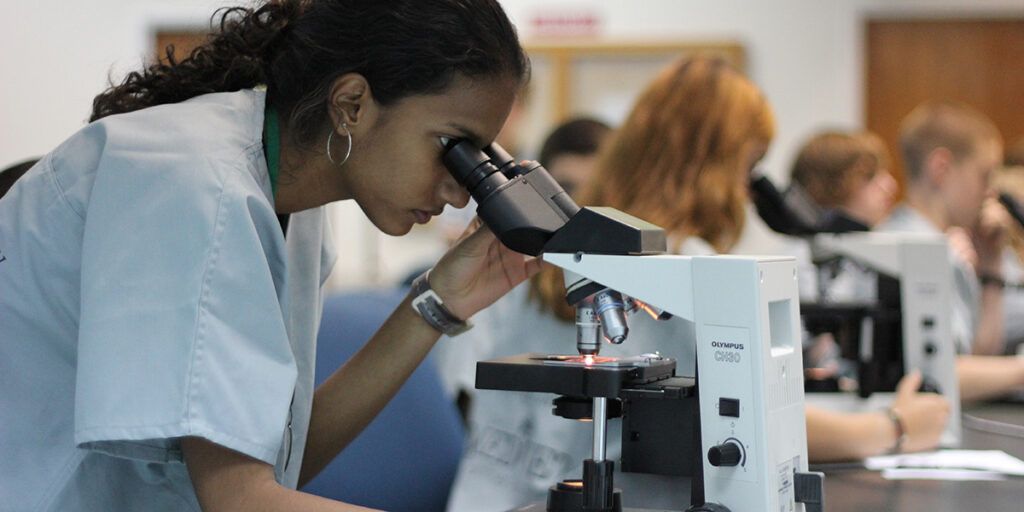
Through case discussions, clinical scenarios, and applied learning, students begin to bridge the gap between the laboratory and the bedside. The goal is not only to understand disease mechanisms, but also to think like a physician.
Along the way, students build skills that remain valuable far beyond exams: curiosity, critical thinking, confidence in reading medical literature, and the ability to connect what is happening at the cellular level to what a patient is experiencing in real life. These are the skills that matter when symptoms do not follow the textbook, or when new research changes what we thought we knew.
For students interested in research, these fields also open doors to areas such as infectious diseases, vaccine development, antimicrobial resistance, chronic inflammation, and global health. SGU provides opportunities to explore these interests through electives, research projects, and faculty mentorship.
The bigger picture
Immunology and microbiology are where medicine begins to move beyond memorization and toward real understanding. They show students how the body defends itself, how disease develops, and how scientific discoveries translate into better care.
For students just starting their medical journey, these subjects offer something more valuable than facts: they offer a way of thinking. They teach future physicians to ask better questions, think more deeply, and understand the science that makes healing possible.
And in many ways, they reconnect students with why they chose medicine in the first place: to understand the human body, to help people, and to be part of a field that is always moving forward.
Because learning how the body fights disease is not just one part of medicine, it is central to it.
Maria E. Ramos-Nino
BPM3, Department of Microbiology, Immunology, and Pharmacology