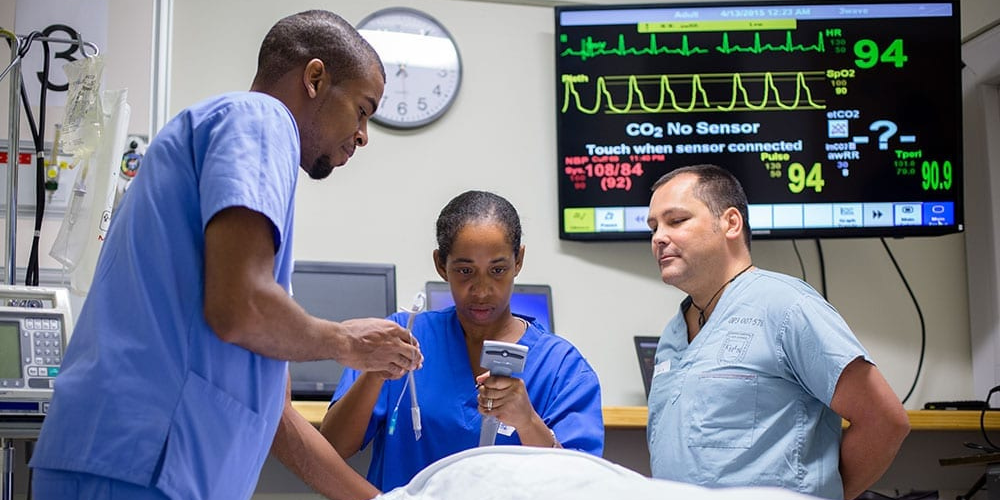
St. George’s University School of Medicine Simulation Center (SGUSOM SimC) has achieved a significant milestone in medical education with the full accreditation of its Simulation Program. The Society for Simulation in Healthcare (SSH), in collaboration with the Council for Accreditation of Healthcare Simulation Programs, granted accreditation in the areas of assessment and teaching/education, extending through December 31, 2030.
This recognition reflects SGU’s commitment to providing future healthcare professionals with cutting-edge training that mirrors real-world clinical settings. During the review process, the accreditation team commended the program for its quality, learner safety, operational practices, and the dedication of faculty and staff in fostering an exceptional learning environment for students.
“Simulation-based education plays a vital role in preparing students for the realities of clinical practice,” said Dr. Marios Loukas, president of St. George’s University and dean of the School of Medicine. “This achievement reflects the hard work, collaboration, and innovation of our faculty and staff, and reinforces SGU’s mission to educate skilled, confident, and compassionate healthcare professionals.”

A key leader behind the accreditation success was Dr. Anna Cyrus-Murden, assistant professor in the School of Medicine’s Department of Clinical Skills and assistant dean for Simulation. Dr. Cyrus-Murden provided leadership throughout the multi-year accreditation process, strategically guiding program development, coordinating faculty engagement, and ensuring alignment with SSH standards.
“This accreditation embodies a shared institutional mission and a collective commitment to advancing educational excellence,” said Dr. Cyrus-Murden. “Simulation provides a powerful, learner-centered framework in which students actively develop clinical competence, critical thinking, effective communication, and professional identity. I am deeply proud of our team, and the essential role simulation plays in advancing student success at SGU—ensuring learners are well prepared for the complexities of modern clinical practice.”
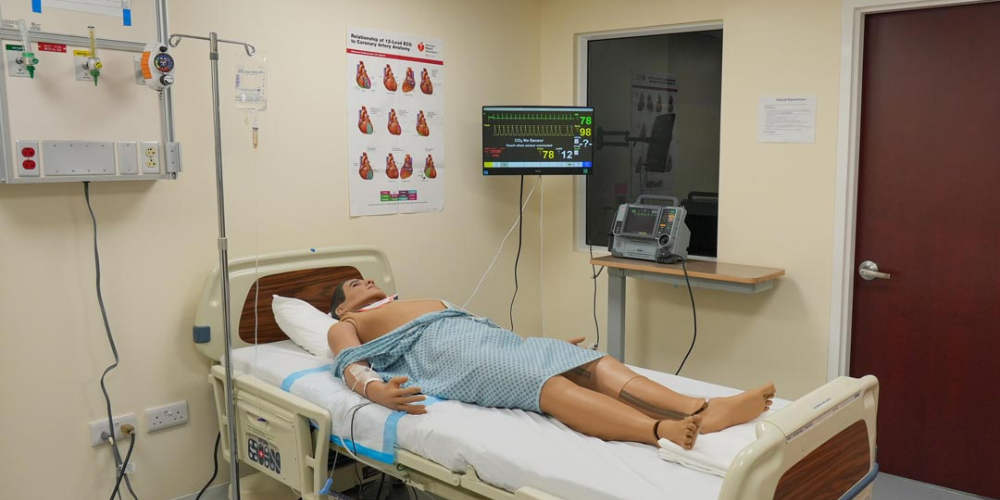
SGU’s Simulation Center is a state-of-the-art facility featuring immersive clinical environments, advanced high-fidelity simulation technology, and standardized patients. Under Dr. Cyrus-Murden’s leadership, the Center has continued to strengthen its integration across the clinical skills curriculum, support faculty development in simulation-based education, and expand the use of structured, outcome-driven assessments—ensuring students develop the clinical competence, confidence, and professionalism required for medical practice.
The accreditation further affirms SGU’s position in simulation-based medical education and underscores its ongoing commitment to preparing graduates with the competencies needed to excel in an evolving healthcare landscape.