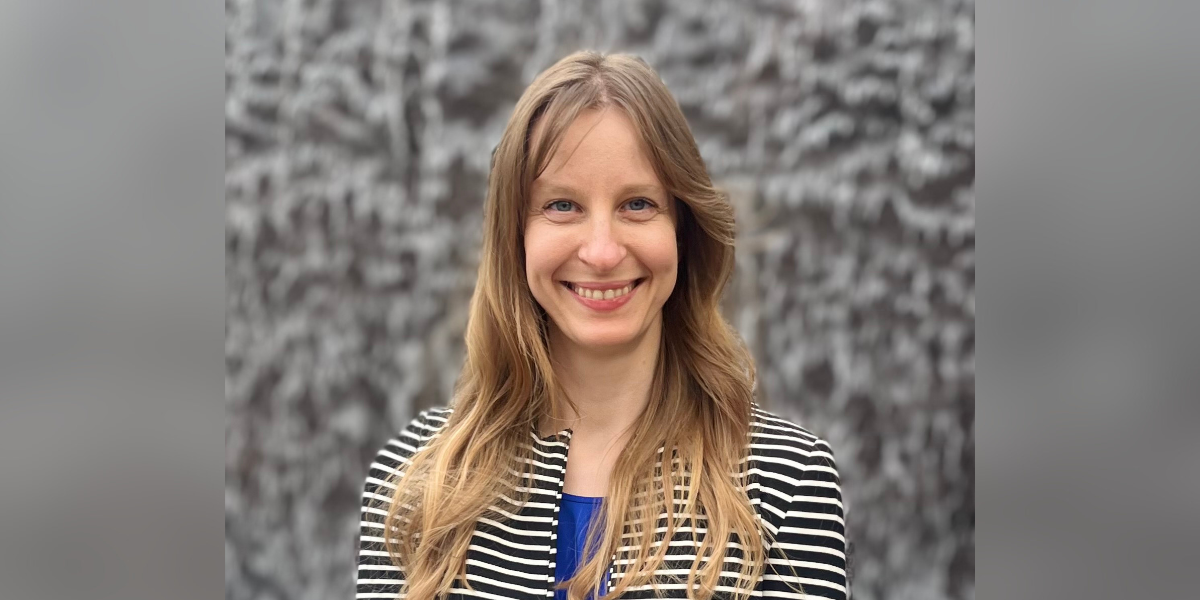
Elizabeth Ryznar, MD, MSc, approaches psychiatry with a strong sense of responsibility to both her patients and her students at St. George’s University School of Medicine as associate chair of psychiatry (US) and professor of medicine.
Dr. Ryznar is a board-certified psychiatrist, having earned her medical degree from Harvard Medical School and an MSc in comparative policy from the University of Oxford. Her work centers on careful listening, mutual respect, and teaching future physicians to value patients as active participants in their care.
“There is a temptation to think ‘I’m the doctor’ and ‘you’re the patient,’ but really, it’s a partnership between someone who is an expert in brain and behavior and someone who is an expert of their own lives,” she says. “If someone’s experience doesn’t match the textbook, that doesn’t mean we should dismiss them.”
She encourages students to approach psychiatry with humility and curiosity, recognizing that meaningful care begins with understanding each patient’s lived experience. Dedicated to psychiatric education, Dr. Ryznar also created a free online module for students about assessing decision-making capacity.
Beyond the classroom and clinic, Dr. Ryznar engages with broader conversations about mental and neurological health. She serves on the advisory board of the Physician and Scientist Network Addressing Plastics and Health (PSNAP) and was recently interviewed by Psychology Today to discuss emerging research on the potential neurological health risks of microplastic exposure.
In this interview, Dr. Ryznar reflects on her day-to-day responsibilities, the lessons she hopes to instill in future physicians, and the qualities she believes define an effective and empathetic psychiatrist.
SGU: What does an average day look like for you in your role?
Dr. Ryznar: I wear many different hats, so it depends on the day. On my clinical days, I work at a general community hospital as a consultation-liaison psychiatrist.
9am: When I arrive in the morning, I catch up with my colleague(s) for a few minutes before logging into the EMR to review the hospital course for patients I am already following and to check our consult list to see what new consults have been placed. Common reasons for psychiatric consultation include anxiety, depression, mania, psychosis, eating disorders, delirium, dementia, adverse effects from medications, and many more. Once I finish my chart review, I start seeing my patients on the wards.
11am: I attend our interdisciplinary team meeting for an integrated medical-psychiatric unit at the hospital.
12pm: I may lead a resident teaching session, attend a hospital administrative meeting, or continue seeing patients.
1-5pm: I usually eat a late lunch at my desk after I finish seeing all of my patients. I finish my documentation at my office, communicate with the primary team about my recommendations, and complete other patient-care related tasks. These tasks might include referrals to inpatient psych hospitals or intensive outpatient programs, calling family or outpatient providers for collateral, or reviewing imaging or laboratory findings. I may also have new consults to see that came in later in the day.
SGU: What kind of technical lessons do you instill in your students during their psychiatry rotation?
Dr. Ryznar: The most important technical lesson I impart to my students is that psychiatric symptoms are not psychiatric diagnoses, despite the similarity in terminology. For example, patients can use the word “anxiety” to describe a multitude of experiences, including:
- multiple uncontrollable worries characteristic of generalized anxiety disorder,
- a sense of danger that we could call paranoia and commonly accompanies early psychosis,
- a sense of impending doom accompanied by physiological changes seen in panic disorder,
- an amped up or tense feeling of hypomania or mixed hypomania,
- or physiological symptoms from hypoglycemia.
All of these require different treatments, which is why a proper evaluation of psychiatric symptoms considering a broad differential is important.
SGU: What are some key lessons you teach about practicing humanely and ethically?
Dr. Ryznar: The most important humanistic lesson I impart to my students is that we are all humans, all worthy of the same dignity.
Unfortunately, we still encounter stigma against psychiatric patients within the healthcare system and our broader society, and we need to remember that every person is doing the best they can. The empathy and communication skills you can practice in your psychiatric rotation will make a big difference in whatever area of medicine you choose to practice in.
SGU: Which attributes make a good psychiatrist?
Dr. Ryznar: I think curiosity and compassion are the most important, there is also:
- Attentiveness towards others: Psychiatry requires close observation and the practice of discerning relevant cues about someone’s emotions, thought process, or behavior, or perhaps a missed physical diagnosis sign of an underlying health condition causing their symptoms.
- Awareness of oneself: The ability to understand and regulate one’s own emotions to properly respond to another’s distress, which may be intense misfortune, sadness, or anger.
- Humility: Psychiatry is a great field—we can do a lot of good. But perhaps more so than in other fields, there exist many unknowns and some amount of subjectivity. There is a temptation to think “I’m the doctor” and “you’re the patient” but really, it’s a partnership between someone who is an expert in brain and behavior and someone who is an expert of their own lives. If someone’s experience doesn’t match the textbook, that doesn’t mean we should dismiss them.
- Balancing hope with acceptance: We know people can improve and their lives can change for the better and we have tools to help them. At the same time, we also have to accept where people are in their lives currently and the limitations of some of our tools.
- Nimble thinking: Most of the time in psychiatry, there is not one specific cause of a presenting symptom or condition. Oftentimes, there are multiple contributing factors, including genetics, brain or body injuries, upbringing, temperament, life traumas, and broader sociocultural forces. A good psychiatrist can juggle all of these factors, while still offering concrete steps to guide someone’s improvement.
All of these qualities are also markers of a great clinician, not specific to psychiatrists.
SGU: What should clinical students know if they want to pursue psychiatry?
Dr. Ryznar: Psychiatry is a wonderful field with a diverse range of jobs. If you love neurology and psychiatry, you can do neuropsychiatry. If you love internal medicine and psychiatry, you can work in primary care clinics or as a consultation-liaison psychiatrist. You can focus your practice on:
- a certain population of patients, for example, based on diagnosis, cultural group, or forensics,
- a certain modality like psychotherapy, psychopharmacology, or interventional psychiatry (i.e. electroconvulsive therapy and transcranial magnetic stimulation), or
- a certain setting like inpatient, outpatient, or in between the two like residential or partial hospitalization programs, or emergency departments.
SGU: What advice do you have for clinical students applying to residency positions in psychiatry?
Dr. Ryznar: When applying to psychiatry residencies, it is important to share anecdotes that showcase your appreciation of both the medical and humanistic/psychotherapeutic aspects of psychiatry.
It is also helpful to indicate what kind of psychiatric practice you are interested in exploring in residency, even if it’s general like “community psychiatry.” You want to give some indication that you understand what psychiatry jobs look like, but of course you are not beholden to this choice. Make sure the programs you are applying to have exposure to whatever practice area you describe.
If you do have a specific interest within psychiatry, like child and adolescent psychiatry, medical education, neuropsychiatry, or forensic psychiatry, there are many smaller psychiatry subspecialty organizations that have wonderful annual meetings that are great networking opportunities for students. The annual American Psychiatric Association meeting also has opportunities for students to meet and greet program directors, but may be a little overwhelming as it is a very large conference.
SGU: What advice would you give incoming clinical students to be successful in the clinical years?
Dr. Ryznar: Stay curious about your patients, not just the diagnoses they have but also their experience of the medical system and their life stories. With each level of training, you will carry higher numbers of patients, and you won’t have the same opportunity to spend prolonged 1:1 time with patients.
Try to learn from everyone around you: the residents, attendings, nurses, social workers. Recognize the knowledge and experience they have and incorporate elements of what you like into your own budding practice of medicine.