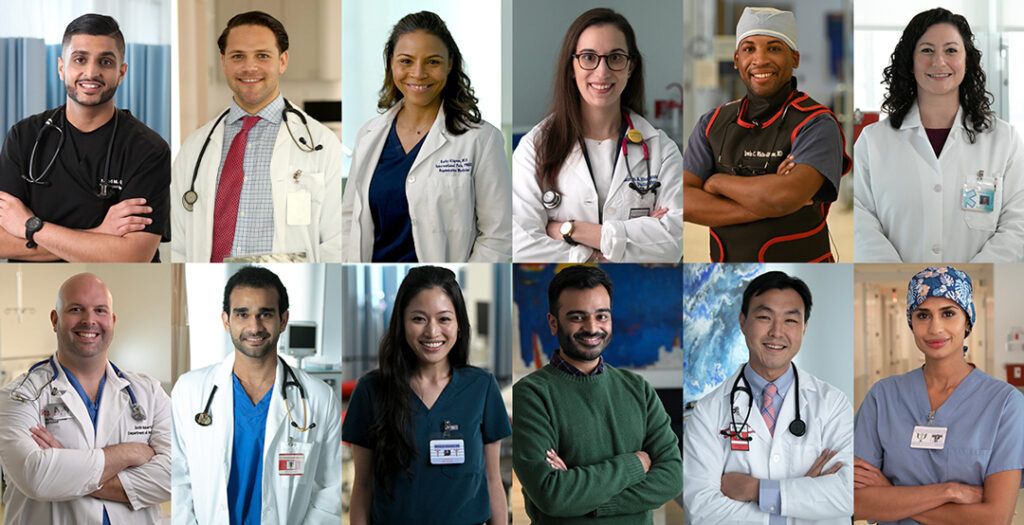
Many students begin medical school immediately after finishing their undergraduate degree. But that trajectory may not be the right fit for everyone. For some students, enrolling in medical school after gaining real-world experience or pursuing a career change that aligns with their long-term goals makes better sense. In many cases, that additional time builds maturity, clarity, and confidence, turning career aspirations into success stories. Contrary to popular belief, there’s really no such thing as being too old for medical school.
Are you actually too old for medical school? (age expectations vs. admissions reality)
If you’re asking yourself, “Am I too old for medical school?” here’s some good news: There is no age cutoff. Maybe you’re working toward an exciting career change and you’re finally ready to apply to medical school. Maybe it took you a while to figure out your true passion. Or maybe you’ve been working in the healthcare field and want to take your experience to a new level.
Whatever your story might be, don’t let age be a barrier. At St. George’s University, our student body spans talented individuals in their 20s, 30s, 40s and beyond. Our admissions committee does not include age as a defining factor of whether you should attend medical school, but instead focuses on your life experience, career trajectory, personal journey, and academic readiness.
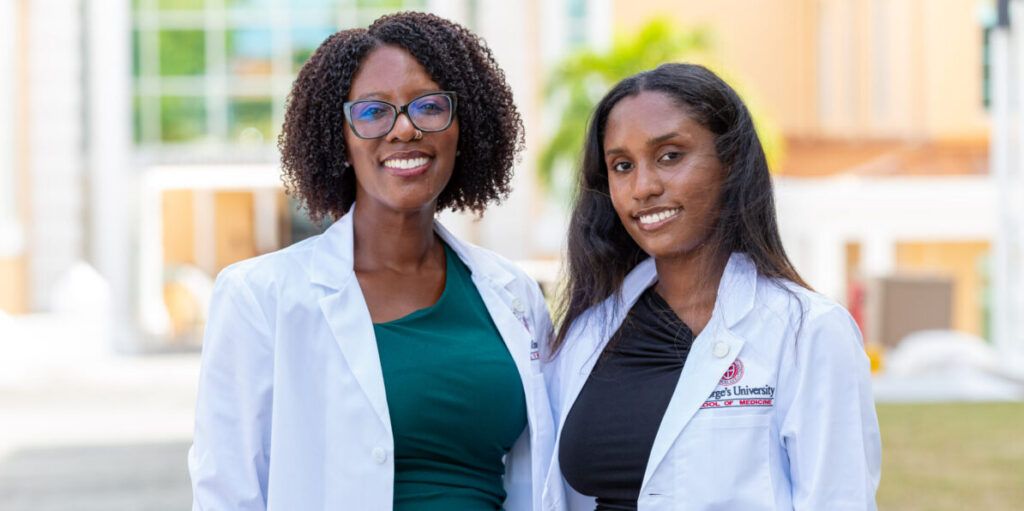
“I was actually in research for six years prior to medical school,” says Dr. Jacqueline Larson, a former graduate of St. George’s University (SGU). She suggests prospective applicants focus on the end goal rather than how long it might take to reach it.
“That’s what you should be happy about – your accomplishment,” says Dr. Larson.
What medical schools actually care about more than age
At St. George’s University, we do not believe only those of a certain age are eligible for a rigorous medical education. So what factors are taken into consideration by admissions committees? As mentioned earlier, academic readiness along with performance are exceedingly important to securing your spot in medical school– and that doesn’t just mean a high GPA. While GPA scores are certainly taken into account, the context of your grades is equally important. For example, a course load which includes biology, chemistry, and physics provides a strong foundation for success in medical school and will be looked upon favorably by admissions committees.
In addition to your undergraduate education, MCAT scores notoriously play a significant role in admissions decisions. Recent data from the Association of American Medical Colleges (AAMC) show that the mean MCAT score for applicants to MD-granting US medical schools is approximately 506. It’s good practice to take the MCAT the year before you plan to start school to allow enough time to retake the test if you’d like to improve your score.
Personal strengths also hold a lot of weight with admissions committees. For older applicants to medical school, it is especially important that you are able to articulate, “why medicine?” and “why now?” Admissions committees want to understand your journey. Personal attributes like maturity, good decision-making, resilience, and strong communication skills are just as relevant as GPA scores.
Do healthcare workers get into med school more easily?
Previous healthcare experience can be helpful when applying to medical school, but it does not guarantee admission. Whether you have a background as a nurse, EMT, paramedic, MA, medical scribe, or something similar, don’t let your resume speak for itself. Emphasize what skills you’ve mastered in your career so far, and how you believe that experience will benefit you as you pursue a medical degree.
Nurses and paramedics, for example, have valuable practical experience in high-pressure situations where decision-making often comes into play. A medical scribe, in contrast, has relevant experience in a more administrative-heavy environment. While admissions committees will see prior healthcare roles as proof of clinical experience, it’s not a replacement for academic requirements like GPA and MCAT scores.
The real value of clinical exposure in medical school admissions
The value of clinical exposure to admissions depends on the type of clinical exposure. Experiential clinical work, for example, is more meaningful than observational roles because it involves direct patient interaction and a hands-on understanding of healthcare. This can be a major opportunity for older candidates, who often bring with them real-world work experience.
Since hands-on experience gives candidates more insight into patient care, it shows admissions committees that they’ve already adopted a physician mindset in a clinical environment. That’s why, when presenting your clinical experience in interviews and personal statements, it’s vital to focus on both the work you performed and key moments of professional insight and growth. The real value of clinical exposure is to enhance your personal narrative and show the committee that you can handle patient care both skillfully and thoughtfully.
The non-traditional advantage (if you don’t waste it)
Experience and maturity are the hallmarks of age and can serve as a meaningful advantage to medical school applicants. Students often express concern that waiting several years after undergrad to apply for medical school shows hesitation and implies waywardness, but if that time has been used intentionally, the gap will prove highly beneficial.
In reality, life experience is seen as proof of commitment, not hesitation. Applying to medical school later in life doesn’t mean you’re not taking the journey seriously, but rather that you’ve had time to develop the maturity, time-management skills, stress tolerance, and leadership skills necessary to thrive. These are qualities that can often only be learned through real-world experience.
When applying, consider your age an asset, not a liability. Avoid language that acknowledges your age in a defensive way, and refrain from over justifying why you’re choosing to apply later than more traditional candidates. Instead of framing your “gap” as a delay or setback, treat it like a period of growth, and explain how it’s better prepared you for clinical success.
Don’t ask: “Am I Too Old for Medical School?” but rather: “Am I Ready?”
When it comes to admissions applications, don’t worry about being too old for medical school; instead, ensure you’re truly prepared. Readiness, not age, is what matters most. Whether it’s through having hands-on clinical exposure, or taking additional time to tackle the MCAT, older applicants often have more time to prepare for the rigors of medical school and leveraging that experience on your application is key. The most successful applicants use a combination of academic excellence and clinical experience to build a compelling personal narrative that shows admissions committees that they’ve developed a physician mindset and are ready to launch their new career.
Learn more about St. George’s University, and start your application journey today.
Frequently Asked Questions
Is there an age limit for medical school?
No. There is no formal age cutoff for medical school admission. Admissions committees evaluate applicants based on academic readiness, clinical exposure, and demonstrated commitment to medicine. Applicants in their 30s, 40s, and beyond are regularly considered alongside more traditional candidates.
Does being older hurt your chances of getting into medical school?
Age alone does not hurt your chances. What matters more is how you present your trajectory. Older applicants are evaluated on recent academic performance, MCAT preparation, and clarity of purpose. When life and work experience demonstrate resilience, leadership, and patient insight, age can strengthen an application rather than weaken it.
Do healthcare workers get into medical school more easily?
Not automatically. Prior healthcare experience, whether as a nurse, EMT, paramedic, medical assistant, or scribe, can provide meaningful clinical exposure. However, it does not replace academic requirements such as GPA and MCAT performance. Admissions committees look for evidence that applicants can succeed academically in addition to bringing clinical insight.
What is the value of clinical exposure in medical school admissions?
The value of clinical exposure in admissions lies in demonstrating firsthand understanding of patient care. Hands-on, experiential roles that involve direct patient interaction tend to carry more weight than purely observational experiences. Strong clinical exposure helps applicants articulate a clear motivation for medicine and shows readiness for physician-level responsibility.
How can non-traditional applicants strengthen their medical school application?
Non-traditional applicants can strengthen their application by focusing on three areas:
- Recent academic performance that shows readiness for rigorous coursework
- Thoughtful preparation for the MCAT
- A clear, cohesive narrative explaining “why medicine” and “why now”.
When life experience is framed as intentional growth rather than delay, it becomes a competitive advantage.