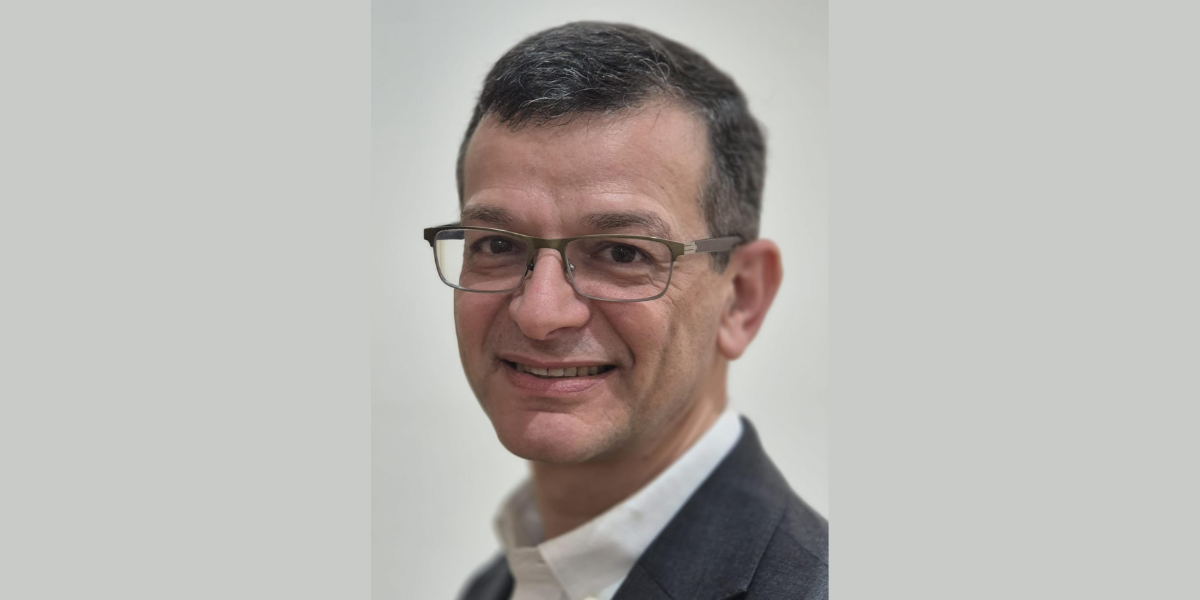
Mr. Lee Dvorkin wears many hats at St. George’s University School of Medicine serving as professor of surgery, director of medical education, UK associate chair of surgery, and assistant dean of student affairs (UK). At North Middlesex University Hospital in London, he practices as a general and colorectal surgeon (and, in keeping with the centuries-old UK tradition of surgeons, uses the title “Mr.” rather than “Dr.”).
His days move seamlessly between the operating theatre, outpatient clinics, and hands-on teaching. Throughout it all, he blends surgical precision with a clear commitment to mentoring the next generation of physicians.
Mr. Dvorkin was recently recognized with the 2025 Medical Education Excellence Award. The award recognizes excellent work and a significant, sustained contribution to medical education at North Middlesex Hospital. Recipients are nominated by colleagues or students. Mr. Dvorkin’s nomination mentioned:
- his leadership in the SGU Peer Mentorship Pilot,
- the establishment of a suturing skills program,
- his role as a dedicated clinical advisor,
- and his consistently high-quality teaching, supported by outstanding student feedback.
“Whilst I am delighted to have received this award, the standard of teaching and learning environment we provide our students is very much a team effort,” he says. “It reflects the commitment of both our local education faculty at North Middlesex Hospital and the wider SGU faculty.”
That same team-centered philosophy shapes how Mr. Dvorkin defines excellence in surgery. A member of the Association of Coloproctology of Great Britain and Ireland, the Royal College of Surgeons of England, and the General Medical Council, he believes great surgeons are developed not only through technical training, but through strong mentorship, shared standards, and a culture of accountability.
“A good surgeon will have a combination of excellent technical ability with sound clinical judgement as well as having expert knowledge in their field of practice. Understanding when to offer patients an operation and when not to is a crucial skill to master.” —Mr. Lee Dvorkin
He emphasizes that surgeons must also be humble in nature, guided by robust ethical principles, and able to connect with and reassure patients through strong listening skills and empathy.
In this interview, Mr. Dvorkin reflects on his daily responsibilities as a surgeon and educator, the lessons he hopes students take from their surgical rotations, and why the UK clinical training experience offers a uniquely valuable perspective for aspiring physicians.
SGU: What does an average day look like for you in your role?
Mr. Dvorkin: My role as a surgeon involves regular outpatient clinics, endoscopy and theatre lists. I also attend our weekly bowel cancer multidisciplinary team meeting amongst other clinical meetings. I also take part in the department’s emergency surgery provision undertaking emergency surgery, night and weekend on-calls.
I supervise several residents and senior fellows as well as the SGU teaching fellow. Teaching forms a pivotal part of my role and I am often teaching students or residents in a variety of clinical contexts. I run a number of clinical courses and frequently lecture to family medicine physicians and residents.
SGU: What is your favorite part of your role?
Mr. Dvorkin: My favorite part of my role is speaking with patients. Whilst I am a surgeon and the operations themselves are fascinating and challenging, I get the most professional satisfaction from talking to my patients and getting to understand their symptoms, their concerns and their expectations, and then seeing them after their surgery to see how their lives have improved.
Every patient comes with their own story, culture, and experiences which shape their view on healthcare and what to expect from it. The more I understand their history, the more I can tailor my treatment and advice to their needs. Trying to do this well, and communicating complex information in a way patients can understand provides me with a great sense of satisfaction.
SGU: What are some key lessons students should learn during their surgery rotation?
Mr. Dvorkin: All the surgery learning objectives are listed in the SGU Clinical Training Manual, and it is important for students to have a good understanding of these requirements before starting any rotation so they can proactively seek out these learning experiences.
In general, I would say that a surgery rotation is a good place to learn about the principles of gaining patient consent, about the emergency presentation of common surgical pathologies, and to get some experience in the operating theatre.
SGU: What makes clinical training in the UK a valuable part of students’ medical education?
Mr. Dvorkin: Students learn resilience and flexibility and get exposure to a new country and a new healthcare system. Students make friends and contacts that serve them well in their careers, and it provides students with a depth of knowledge and clinical exposure that is not always possible elsewhere. The UK system allows students to have a very hands-on practical experience, and our faculty are experienced and helpful.
We have well established support services in place including counselling, general practitioners, assistant deans, and SGU clinical advisors to support students as necessary.
In short, the UK clinical program is an excellent choice for SGU students, and I would highly recommend it!
SGU: Do you have any advice specifically for students unfamiliar with the NHS/UK healthcare system?
Mr. Dvorkin: Don’t let that put you off coming!
As SGU is an international medical school, we have students from a variety of countries attending the UK clinical program. For most, the NHS, which is a tax-funded, free-at-the-point-of-use health system for all residents, is a new and novel way to provide healthcare. It is certainly worth students understanding the basics of how the NHS is organized, and the advantages and disadvantages of such a system. One way to do this is to read about the NHS before coming to the UK and to speak to clinicians and patients about their experience of the NHS.
Managing patients and dealing with staff in the NHS will be different from the previous experience of most students. Appropriate cultural competence will make the transition easier. Speaking to our UK medical students and student preceptors is helpful.
SGU: What advice would you give incoming clinical students to be successful in the clinical years?
Mr. Dvorkin: Work hard but work cleverly. Understand your learning objectives and how to achieve them. Spread time effectively between ward-based clinical work and self-directed study. Utilize all of the online tools the school provides and engage early with AMBOSS. I find those students who practice exam papers under timed conditions perform better on the NBME.
Seek out your preceptors and be proactive in your learning. Faculty are there to help so do ask if you have any problems. The clinical program is intense at times, so it helps to be organized and plan rotations in good time.
Also, have fun. You are in a new country, and it would be a shame not to explore some of what the UK offers.