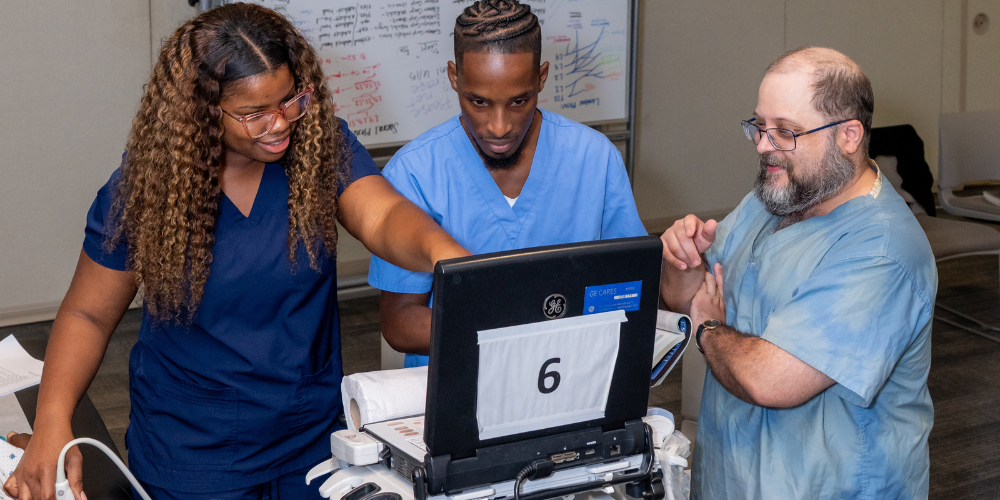
St. George’s University School of Medicine welcomed 10 Grenadian physicians to campus for a two-day point-of-care ultrasound workshop led by SGU graduate and faculty member Michael Montalbano, MD/MBA ’16, giving participants hands-on experience with a rapidly expanding diagnostic tool while reinforcing the University’s commitment to advancing medical education in Grenada.
An associate professor in the Department of Anatomical Sciences and director of the Medical Student Research Institute, Dr. Montalbano guided participants through practical ultrasound techniques that can be immediately applied in clinical practice.
Hands-on ultrasound training strengthens clinical decision-making
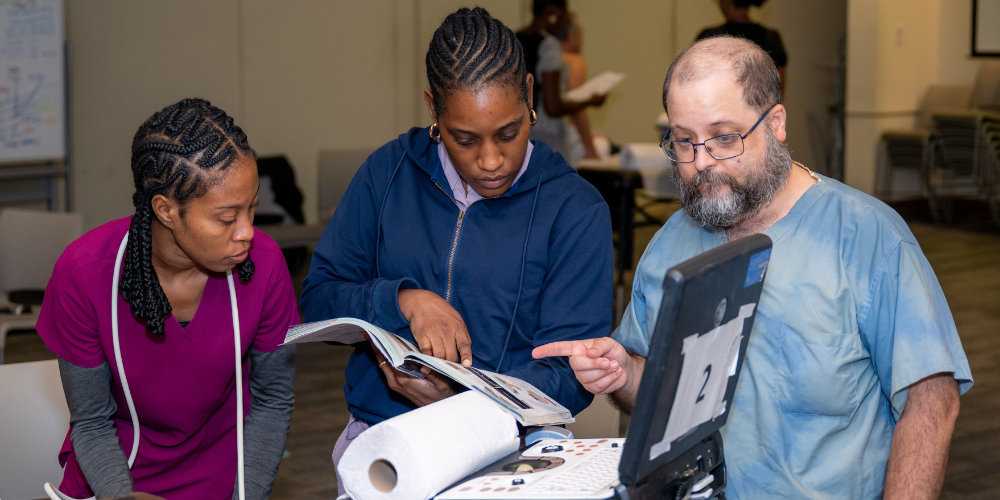
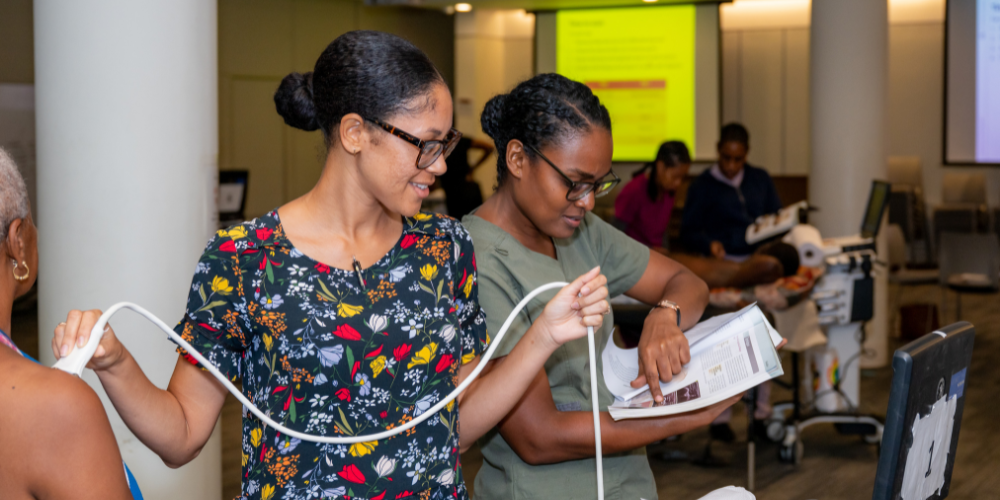
From June 24 to 25, participants explored the basics of point-of-care ultrasound through interactive lectures and supervised scanning sessions. The curriculum covered ultrasound fundamentals, probe selection, machine settings, knobology, and image optimization before moving into case-based instruction.
Working through clinical scenarios involving the upper limb, lower limb, abdomen, chest, neck, and cardiopulmonary systems, physicians reviewed differential diagnoses, selected the appropriate probe, and acquired transverse and longitudinal views of normal anatomy to help support or rule out potential diagnoses.
“Point-of-care ultrasound is a valuable extension of the physical exam, but it works best when clinicians understand the anatomy beneath the probe,” said Dr. Montalbano. “Our goal was to give participants practical skills they can use right away in patient care while strengthening the clinical reasoning behind every scan.”
Grenadian physicians sharpen skills to better serve their communities
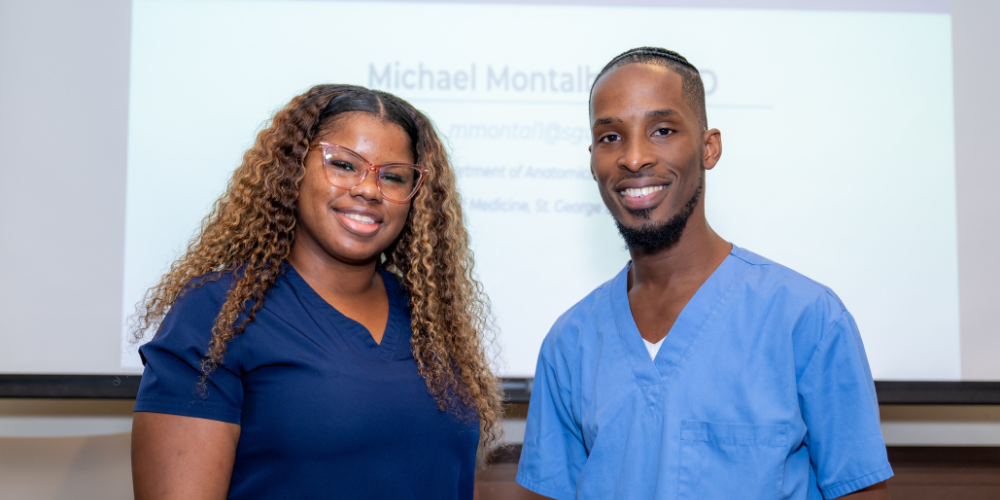
The workshop welcomed 10 physicians from Grenada’s healthcare system, providing an opportunity for local clinicians to enhance their procedural and diagnostic skills while collaborating with SGU faculty.
Among the participants was Jonathan Ramirez, MD ’20, a physician at the Grenada General Hospital and proud SOM alum. Working in nephrology, Dr. Ramirez said the training will directly support patient care, particularly in emergency situations requiring vascular access.
“Ultrasound is a practical skill that has immediate value in clinical medicine,” Dr. Ramirez said. “In nephrology, we often need to establish emergency vascular access for dialysis patients, and having greater confidence with ultrasound-guided procedures will make that process safer and more efficient. Beyond my specialty, these are skills that can make a difference in any emergency setting. I’m grateful that SGU continues to provide opportunities like this for physicians in Grenada so we can continue developing professionally and better serve our patients and our community.”
Anatomy remains at the heart of SGU’s medical education
The ultrasound workshop also highlighted St. George’s University’s longstanding commitment to clinical anatomy as a cornerstone of medical education and its continued investment in innovative approaches to teaching the next generation of physicians.
That commitment is reflected in the work of Dr. Marios Loukas, president of St. George’s University and dean of the School of Medicine, whose internationally recognized contributions to anatomy education have influenced medical curricula and anatomy training worldwide.
Dr. Loukas and Dr. Danny Burns, a professor in SGU’s Department of Anatomical Sciences are co-authors of Essential Ultrasound Anatomy, the textbook used throughout the workshop. The book integrates modern ultrasound imaging with clinically applied anatomy, helping learners connect anatomical knowledge with real-time visualization and clinical decision-making.
“Anatomy provides the foundation upon which every clinical skill is built,” said Dr. Loukas. “When students learn anatomy through modern imaging technologies such as ultrasound, they gain a deeper understanding of the relationship between structure and function while developing the practical skills needed for clinical practice. Integrating anatomy with point-of-care ultrasound prepares future physicians to deliver safer, more accurate, and more effective patient care.”
Clinical anatomy remains one of SGU’s signature academic strengths, with faculty and students actively engaged in education and research that bridges the basic sciences and clinical medicine. Through innovations in anatomy education, ultrasound training, and translational research, SGU continues to prepare physicians with the knowledge, technical skills, and clinical reasoning required to meet the evolving needs of healthcare systems around the world.