

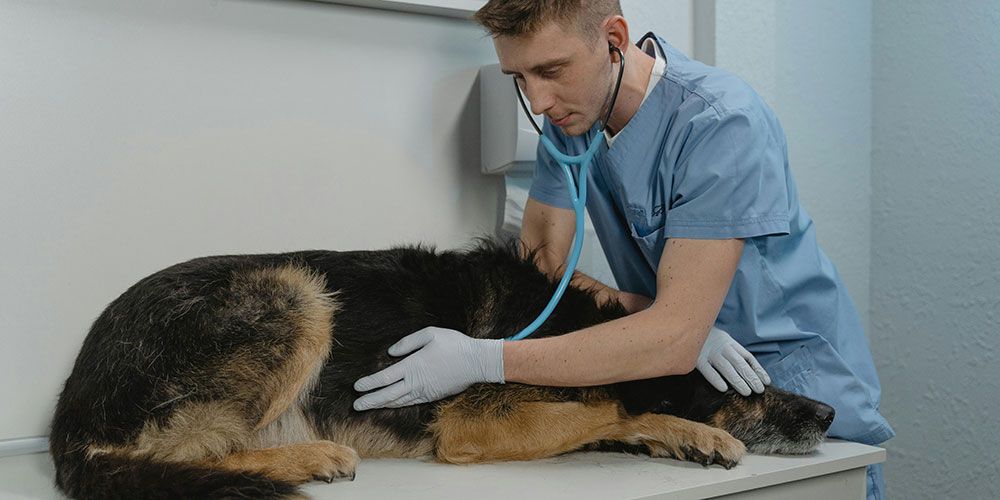
Veterinarians are medical professionals who care for dogs, cats, and other animals, but their work extends far beyond routine pet care. Like other doctors, veterinarians attend school to get a Doctor of Veterinary Medicine (DVM) before entering practice. Their roles are diverse, spanning clinical care, research, public health, and more. So, what is a veterinarian? The answer is a little more complex than you might first expect.
What is a veterinarian, exactly?
Veterinarians are medical professionals who diagnose, treat, and help prevent a wide range of conditions in animals.
“Our goal is to preserve quality of life and alleviate pain while making sure that we work with our pet owners as best we can to help them care for their pets,” says Dr. Justine Lee, board-certified veterinary specialist in emergency/critical care and toxicology. She also notes these medical professionals can treat different species, depending on their specific focus.
Veterinarians improve animals’ lives, and their work can also support better health outcomes for humans.
What do vets do on a typical day?
Working with animals is just one part of what veterinarians do. They are also responsible for:
- Diagnosing conditions
- Administering vaccines
- Prescribing medication
- Performing surgeries
- Completing diagnostic tests
- Educating pet owners
Veterinarians also provide pet owners with guidance to help keep their animals healthy. In fact, Banfield Pet Hospital’s State of Pet Health suggests that following a veterinarian’s nutrition recommendations can help address common issues like osteoarthritis, skin allergies, and animal obesity.
Responsibilities can vary depending on area of focus. “Just like human medicine, where there are specialties in internal medicine, surgery, dermatology, and emergency, veterinary medicine has also started to move that way,” Dr. Lee explains.
Veterinarians who specialize in behavioral medicine perform detailed evaluations to determine whether there’s a medical reason for animal conduct issues and help develop treatment plans. Veterinary toxicologists, on the other hand, may work in office settings, often answering pet owners’ questions.
Dr. Lee consults for the American Society for the Prevention of Cruelty to Animals (ASPCA) Animal Poison Control Center. Pet owners and vets call these types of centers to connect with a specialist when they suspect an animal has consumed a dangerous substance.
“At the ASPCA Animal Poison Control Center, we counsel both pet owners and veterinary professionals on how best to treat the poisoned pet or patient,” Dr. Lee says. Some potential courses of action are teaching someone how to induce vomiting at home, directing a person to seek veterinary attention nearby, or even nonaction in the event the substance in question isn’t harmful.
Where do vets work?
Where a veterinarian works depends largely on their specific role, and the range of settings can be quite diverse. The Centers for Disease Control and Prevention (CDC) outline some common work settings:
- Veterinary clinics and hospitals
- Animal shelters
- Farms and ranches
- Animal processing facilities
- Zoos and aquariums
- Laboratories
Many veterinarians, both those in individual practice and group practices, work in clinics. The CDC estimates this to be around 80 percent of all veterinarians. This still allows for variety. Veterinarians can be found in brick-and-mortar clinics as well as mobile facilities. Mobile clinics are often less expensive to operate and allow veterinary professionals to provide more convenient services for pet owners.
What qualities do you need to be a veterinarian?
Veterinarians rely on a specific set of skills to succeed in their work. Key qualities include compassion, decisiveness, manual dexterity, and strong communication skills. Communication skills are essential and extend beyond interacting with animals. “Potential candidates interested in pursuing the veterinary field as a career have to realize that if they don’t get along with other people, they should not be in the field of veterinary medicine,” Dr. Lee says. “That’s because there’s a lot of interaction with pet owners.”
How do you become a veterinarian?
To practice veterinary medicine, you’ll need to earn several credentials, the most important being a Doctor of Veterinary Medicine (DVM) degree. You’ll also need to complete specific prerequisite coursework to become an eligible applicant.
Before applying to veterinary schools, you’ll need to ensure you meet all requirements, which go beyond coursework. While some vet programs require the Graduate Record Examination (GRE), SGU does not require GRE scores for admission to its DVM program, though it can make your application stronger. Most programs do require letters of recommendation, a personal statement, and a certain degree of veterinary experience which can allow you to engage with the profession in a realistic way.
Gaining that experience is particularly important. “Applicants should have at least 100 hours of experience working—or volunteering—in a veterinary clinic,” Dr. Lee advises. She adds that gaining veterinary experience can also help you determine whether you’re truly committed to the field before investing in your education.
Once you begin veterinary school, you’ll typically spend your first three years in classroom and lab-based learning, followed by a final year of clinical rotations. Near the end of your education, you’ll sit for the North American Veterinary Licensing Examination (NAVLE), a 360-question test you must pass to practice. After the NAVLE, you may also need to complete an additional licensing exam depending on where you plan to practice.
Some DVM graduates choose to pursue a residency or internship to become certified specialists, often securing positions through the Veterinary Internship and Residency Matching Program (VIRMP), a system similar to the Match process used by human residency programs. However, it is not required. “Once you graduate from veterinary school, you can go straight out to become a general practitioner or family veterinarian,” Dr. Lee notes.
What is the career outlook for veterinarians?
Having a passion for animals is one reason many people pursue a career in veterinary medicine. It’s also a growing field with expanding opportunities.
Increased pet care spending and the need for professionals who help maintain a safe food supply are contributing to continued growth in the field. According to the US Bureau of Labor Statistics, veterinarian employment is expected to grow by 10 percent through 2034, faster than the national average for all professions.
Is a career as a veterinarian right for you?
You now have a better understanding of the role veterinarians play and the impact they can have.
If veterinary medicine sounds like a path you want to pursue, it’s important to understand the full scope of the profession and what to expect day to day. Learn more about what to expect on the job by reading our article, “8 Things You Should Know Before Becoming a Veterinarian.”
This article was originally published in 2018. It has since been updated to include information relevant to 2026.
Frequently Asked Questions
What is the difference between a veterinarian and a vet tech?
A veterinarian is a licensed medical professional who diagnoses and treats animals, performs surgeries, and prescribes medication. A veterinary technician (vet tech) supports veterinarians by assisting with exams, running tests, and providing patient care but does not diagnose conditions or perform surgery independently.
How long does it take to become a veterinarian?
Becoming a veterinarian typically takes about eight years. This includes four years to earn a bachelor’s degree followed by four years in a Doctor of Veterinary Medicine (DVM) program. Additional training may be required for those pursuing a specialty.
Do veterinarians only work with pets?
No, veterinarians work with a wide range of animals. While many care for companion animals like dogs and cats, others work with livestock, wildlife, zoo animals, or in research and public health settings.
What degree do you need to become a veterinarian?
To become a veterinarian, you must earn a Doctor of Veterinary Medicine (DVM) degree from an accredited veterinary medical program. Before that, you’ll need to complete prerequisite coursework, often as part of a bachelor’s degree.
Is becoming a veterinarian a good career choice?
Veterinary medicine can be a rewarding career for those interested in science, animal health, and helping others. It offers a variety of career paths and work environments, allowing professionals to find roles that match their interests and goals
Can veterinarians specialize in certain areas?
Yes, veterinarians can pursue specialties such as surgery, emergency and critical care, dermatology, or behavior. Specialization typically requires additional training through internships, residencies, and certification.