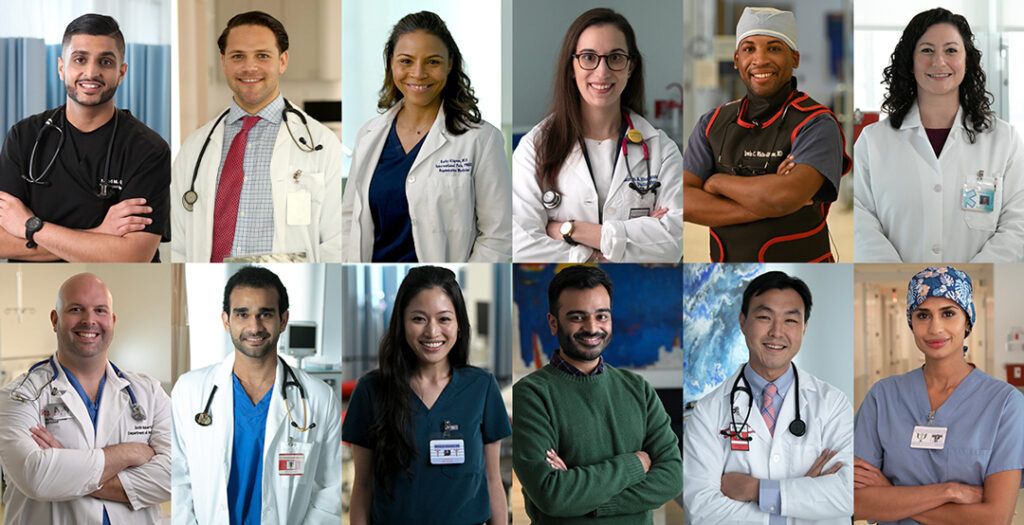
Conventional wisdom suggests that to become a doctor, you must study at a medicine-centered college, and then immediately attend a US medical school. Luckily for those who discovered their love of medicine later in life, that path isn’t the only way to achieve an MD. Plenty of people pursue a career change to doctor in their 30s or 40s, after already working for several years in non-medical careers. While prior experience in medical-adjacent fields is always helpful, it is certainly not necessary to become a quality physician. If you’re considering a career change to doctor, here are some important considerations to keep in mind.
What it means to be a “non-traditional” medical student
Becoming a doctor doesn’t require a rigid, linear journey. When it comes to medicine, fresh perspectives and diverse life experiences are incredibly important, which is good news if you’re considering switching careers into medicine. Medical schools understand this, and value it. As a non-traditional applicant, you may be older than your peers and lack academic medical experience, but that delayed timeline should not be a deterrent. Depending on your specific life and career experiences, you are likely to bring maturity, leadership, and resilience to the table. If you do have prior medical experience, your clinical exposure is also a huge benefit, as you’ve had the opportunity to develop patient empathy in a real-world setting.
St. George’s University understands the often winding road to becoming a second-career physician, and, therefore, makes sure you have the resources needed to decide if medicine is right for you.
Schools claiming to be friendly to career-changers should always recognize professional experience as an asset. At St. George’s University, our wide range of student profiles support this perspective. We know that students who have pivoted from different fields, like education, military service, and finance, bring unique attributes to a second career. To ease the transition, we offer a specialized post-baccalaureate (postbacc) program.
We also pride ourselves on our clinical placement model – a network of affiliated hospitals and health systems in the US and UK – to help non-traditional students gain clinical competence during their final years of education.
Academic pathways: How career changers complete prerequisites
One of the most daunting parts of switching careers into medicine is the prerequisites that you may not have completed. While it’s possible to take individual prerequisite courses on your own, a postbacc pre-med program is the best way to get caught up. SGU’s postbacc pre-med curriculum is designed to ease your transition into medical school as a non-traditional applicant, and help you meet the necessary requirements in just one year of study. While we also offer a specialized master’s (MSc) degree for medical students who are seeking additional academic experience at the graduate level, the postbacc is a more fitting option for career changers.
Many non-traditional applicants continue to work in their previous careers while seeking medical education. While a career change to doctor will ultimately require a full-time educational commitment, in the early stages of the transition there are online and part-time options available. We offer both Master of Public Health degrees, a Digital Health in Medicine course, and specialized certificates that can be taken online or completed part-time.
As you can see, there is a diverse range of options for starting your medical education later in life. Medical schools accepting career changers do their best to make the pathway as smooth as possible.
Application strategy for second-career physicians
Far from being a liability in the application process, working in another career can actually be seen as an asset. It’s all about how you position the experience. SGU grads have ranged from former Air Force pilots and film producers, to athletes, all of whom brought a unique set of skills and experiences to their medical chapter. On your application, be sure to highlight the attributes you gained from your prior career, which will support your success in medicine. Personal statements and letters of recommendation are ideal platforms to showcase the relevance of your work experience, especially if you’ve previously worked in the medical field with patient-facing clinical exposure.
Your MCAT score should also be considered when going through the application process. While not a make-or-break for admission, they’re an important factor that should be taken seriously. It’s a good strategy to align your MCAT testing with the completion of your postbacc, or a Master’s program, so your resume looks as comprehensive as possible.
Challenges career changers face — and how to overcome them
Although medical schools can take steps to make themselves more accessible to career changers, there are several challenges inherent in the process of switching careers. As with most higher education, prospective students must prepare for tuition costs. As a non-traditional student, however, you are often uniquely equipped to handle these costs, due to being in the workforce for several years, and having had a chance to save for higher education – especially compared to students who just graduated college.
Nevertheless, a career shift can take a toll on you and your family. Consider how this might affect your loved ones, and make sure you really have the time to commit to a medical school journey. After all, you’re switching your identity and lifestyle, which can be exciting, but it can also give you a sense of imposter syndrome. Remind yourself that your non-traditional background can actually be a competitive advantage, and that your work experience equips you to handle medical school’s unique challenges.
Finally, don’t get overwhelmed by the daunting application process. Create a timeline with a list of application deadlines and deliverables, and stick to it. Having a clear plan is the best way to prevent overwhelm and keep stress manageable.
Is a career change to doctor the right next step?
If you’re considering a career change to doctor, don’t be discouraged by the fact that you didn’t follow a traditional path to medical school. At St. George’s University, we consider that non-traditional path an asset rather than a liability. A diverse professional background and prior clinical work experience can prove hugely beneficial to future doctors – especially if it’s framed properly on an application. If you’re ready to start your next chapter, get in touch to speak with an admissions advisor and explore our postbacc program. Looking for more answers? Check out our career-changer roadmap to evaluate your readiness for a career as a doctor.
FAQs
Is it too late to pursue a career change in my 30s or 40s?
No, it’s not. Many successful medical school students become doctors later in life. If they frame their life experience strategically, schools will value their maturity, leadership, and resilience.
How do I complete prerequisites for medical school?
A specialized postbacc program is the best way to complete your prerequisites. SGU’s postbacc program is designed to help career changers meet these prerequisites in just one year.
How should I frame my non-medical work experience on my application?
Highlight relevant skills you learned in your previous roles that are transferable to the medical field. Make sure these skills are emphasized in your personal statement and letters of recommendation.