

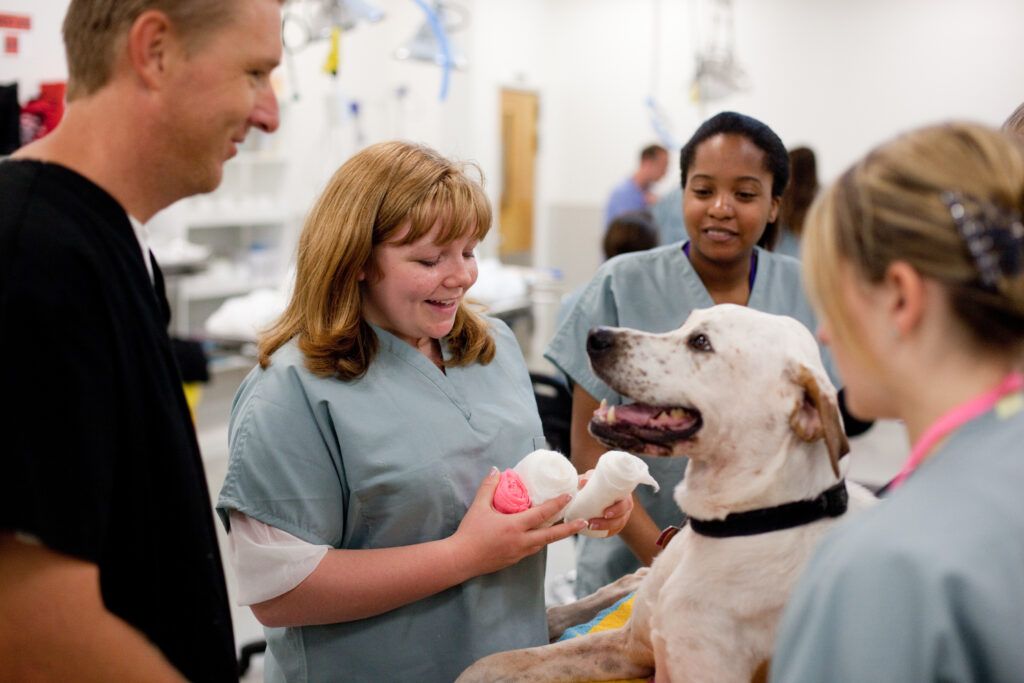
There are several types of veterinarians, each specializing in different animals, medical disciplines, and career paths, from companion-animal practice to research, food safety, and specialty medicine. While many Doctor of Veterinary Medicine (DVM) graduates pursue careers working with pets, there are other different types of veterinarians as well.
While you can easily spend hours researching the range of career options for veterinarians, we’ve simplified the process. Below, we’ve highlighted five of the major types of veterinary positions you should know about. Exploring each one can help you determine which career aligns best with your interests and goals.
Five types of veterinarians you should know about
This list provides a helpful overview of several paths you could pursue as a veterinarian. However, it is worth noting that there are many specializations under each major category– so be sure to research further as you find your perfect fit.
1. Companion-animal veterinarians
While they represent just one segment of the veterinarian population, those who work with companion animals make up the largest group. In fact, the American Veterinary Medical Association (AVMA) reports that around 75 percent of all veterinarians in private practice work primarily or exclusively with companion animals.
These practitioners, also called small animal veterinarians, are similar to primary care physicians for humans. Their day-to-day tasks involve treating wounds, diagnosing illnesses, performing surgery, administering vaccines, prescribing medications, and more. They also provide end-of-life care, including euthanasia.
Small animal veterinarians may specialize in shelter medicine, a growing field focused on caring for animals in need of homes.
2. Veterinary specialists
Like physicians who treat people, veterinary physicians can pursue countless specialties. In fact, the AVMA recognizes more than 20 different kinds of veterinarians within this category. Career options include anesthesiology, dentistry, pathology, and surgery. Veterinarians may also choose to specialize in a particular species or group of animals, like cats, dogs, poultry, or wildlife.
Veterinary Specialists often serve as consultants for other vets when a particular type of treatment, equipment, or expertise is required. Their skill sets and daily responsibilities vary depending on their area of focus.
As the American College of Veterinary Pathologists (ACVP) explains, veterinary pathologists study disease in animals. Similarly, the American College of Veterinary Emergency & Critical Care (ACVECC) notes that emergency veterinarians specialize in treating patients in emergency rooms and intensive care units.
3. Food-animal veterinarians
Food-animal veterinarians primarily work with animals raised for human consumption to ensure the safety of food products. Many large-animal veterinarians fall into this category, though that is not always the case. Regardless of the specific focus, the AVMA notes that these types of vets ensure animal welfare while preventing and controlling disease. They may work on ranches and farms, and they often spend a fair amount of time traveling.
4. Food safety and inspection veterinarians
While both food-animal veterinarians and food safety and inspection veterinarians play roles in keeping edible products safe, they are not the same. As the AVMA points out, food safety and inspection veterinarians often work for government agencies, including the US Food & Drug Administration’s Food Safety and Inspection Service, to help enforce regulations.
These types of veterinarians have many responsibilities, including:
- Inspecting livestock and animal products, such as eggs, dairy, and meat.
- Ensuring products meet sanitation standards.
- Quarantining infected animals to prevent illness from spreading to other animals and humans.
- Testing the safety of medications and additives.
5. Research veterinarians
While every DVM must have strong scientific knowledge, it’s even more important for research veterinarians. According to a career overview from the AVMA, these types of veterinarians may work for government organizations, biomedical research firms, or universities. Veterinarians employed by educational institutions are often faculty members who teach vet students.
Veterinarians employed by schools and government agencies may review past research and techniques to improve methods for diagnosing, treating, and preventing health conditions. Those working with biomedical or pharmaceutical firms develop and test drugs and other medical products.
Type of Veterinarian |
Primary Focus |
Typical Work Setting |
Additional Training Required |
|---|---|---|---|
Companion-Animal |
Dogs, cats, household pets |
Private clinics, hospitals |
DVM |
Veterinary Specialist |
Advanced medical/surgical care |
Specialty hospitals |
Residency & board certification |
Food-Animal |
Livestock and production animals |
Farms, ranches |
DVM |
Food Safety & Inspection |
Food safety and regulation |
Government agencies |
DVM |
Research Veterinarian |
Disease research and drug development |
Universities, labs |
DVM (often PhD optional) |
What type of veterinarian do you want to be?
As a DVM, you have no shortage of career options. As you consider which type of veterinarian you’d like to become, it may be helpful to think about your next steps.
If you have additional questions, you can connect with SGU to explore your options for veterinary medicine education. A current student or admissions advisor will reach out to provide more information about our veterinary programs.
FAQs:
How many different types of veterinarians are there?
There are dozens of different types of veterinarians. The American Veterinary Medical Association (AVMA) recognizes more than 20 veterinary specialties, and veterinarians may also focus on specific species such as companion animals, aquatic animals, livestock, wildlife, or exotic pets. Career paths range from clinical practice to research, public health, and food safety.
Which is better, DVM or VMD?
A Doctor of Veterinary Medicine (DVM) and a Veterinary Medical Doctor (VMD) are equivalent degrees. Both allow graduates to practice veterinary medicine after passing the required licensing exams. The only difference is the title used by certain institutions. For example, the University of Pennsylvania awards a VMD instead of a DVM.
What is the highest paid type of veterinarian?
Veterinary specialists typically earn the highest salaries. According to the U.S. Bureau of Labor Statistics, the median annual wage for veterinarians was $119,100 in May 2023, though board-certified specialists in areas such as surgery, anesthesiology, and emergency medicine often earn significantly more depending on experience and location.
What are different types of vet jobs?
Veterinary jobs include companion-animal veterinarians, food-animal veterinarians, veterinary specialists, research veterinarians, and food safety and inspection veterinarians. Within these categories, veterinarians may work in private clinics, hospitals, farms, laboratories, universities, pharmaceutical companies, or government agencies.
How long does it take to become a veterinary specialist?
After earning a DVM or VMD degree, veterinarians who want to specialize typically complete a one-year internship followed by a three- to four-year residency program. Board certification through an AVMA-recognized specialty organization is also required.
What is the most common type of veterinarian?
Companion-animal veterinarians are the most common. The AVMA reports that the majority of veterinarians in private practice work primarily with dogs and cats.
Can veterinarians specialize in one type of animal?
Yes. In addition to medical specialties, veterinarians can focus on particular species, such as equine, feline, avian, poultry, or wildlife medicine.
Do veterinarians work outside of clinics?
Yes. While many veterinarians work in private practice, others work in research laboratories, universities, government agencies, food inspection services, pharmaceutical companies, and public health organizations.
This article was updated from October 2021 with the most recent facts and figures available.