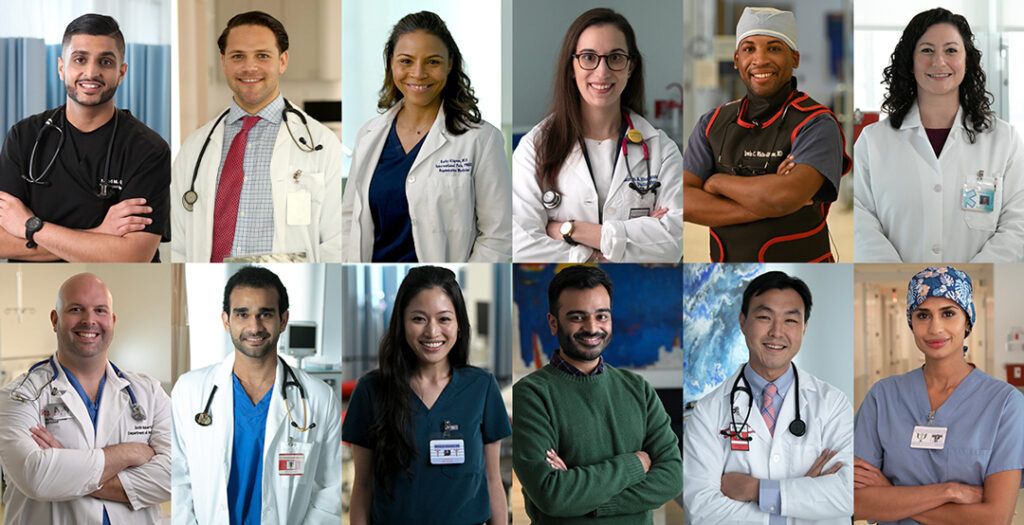

Considering medical school outside the United States or Canada? You’re not alone. Thousands of students each year look to accredited Caribbean medical schools for an alternative path to becoming physicians. Whether you’re exploring your options or preparing to apply, understanding accreditation, curriculum, costs, and outcomes is key to making an informed decision.
For over four decades, St. George’s University (SGU) has been helping ambitious students achieve their dream of practicing medicine around the world. In fact, no other medical school in the world provides more new doctors to the US healthcare system, with more than 1,049 US residencies in 2025. 1
This comprehensive guide answers the most frequently asked–and the most important–questions about Caribbean medical schools in 2026.
Accreditation and eligibility
1. Are Caribbean medical schools LCME-accredited?
The Liaison Committee on Medical Education (LCME) only accredits medical schools located in the United States and Canada. However, reputable international schools, such as SGU, are recognized by accrediting bodies whose standards are deemed comparable by US authorities.
As of 2024, the Educational Commission for Foreign Medical Graduates (ECFMG) requires that graduates come from schools accredited by a World Federation for Medical Education (WFME)-recognized agency to qualify for ECFMG certification. This certification is essential for US clinical rotations, residencies, and medical licensure.
2. How can I verify a school’s accreditation and ECFMG eligibility?
You can confirm whether a school is recognized by checking its listing in the World Directory of Medical Schools (WDOMS). Each listing specifies if the institution meets ECFMG eligibility requirements.
For SGU:
- SGU is accredited by the Grenada Medical and Dental Council (GMDC), recognized by WFME.
- SGU appears in the WDOMS as meeting ECFMG requirements for certification.
3. Where can I verify a school’s status and policies?
Before applying to any international medical school, it’s essential to confirm its accreditation, eligibility, and compliance with global education standards. These trusted resources will help you verify that SGU–and any other institution you consider–meets all requirements for medical licensure and residency training.
Students should verify any medical school’s standing through the following official resources:
- World Directory of Medical Schools (WDOMS)
- World Federation for Medical Education (WFME)
- Educational Commission for Foreign Medical Graduates (ECFMG)
- The US Department of Education’s National Committee on Foreign Medical Education and Accreditation (NCFMEA)
- St. George’s University Accreditation Page
These verifications ensure eligibility for US clinical rotations, federal loans, and licensure.
Admissions and requirements
What are the admissions requirements for Caribbean medical schools, and how many people are accepted? Here’s what you need to know.
4. What do Caribbean medical schools look for in candidates?
Medical schools look to admit qualified candidates from their applicant pools. While admission standards vary, institutions like SGU maintain rigorous criteria that assess both academic achievement and professional readiness. SGU uses a holistic admissions process, reviewing grade point average (GPA), Medical College Admission Test (MCAT) scores, volunteer experience, and personal statements to identify students with the determination and aptitude for medical school success.
5. Is the MCAT required?
Not all Caribbean medical schools require MCAT scores from applicants, but you should expect that most reputable institutions will. For US applicants, the MCAT is required by SGU, which reviews MCAT scores alongside GPA and other factors to evaluate readiness for the Doctor of Medicine (MD) program. For applicants outside the US, an MCAT score is not required. For Canadian applicants, an MCAT score is not required unless an MCAT exam has been taken previously or you have a date to take an MCAT.
6. Can I get in if I’m missing a prerequisite? What is conditional acceptance?
Some schools may offer conditional acceptance if you’re missing one or two prerequisite courses. SGU provides structured premedical programs that help students complete missing coursework before starting the four-year MD curriculum.
7. How many times should I take the MCAT?
While multiple attempts at the MCAT are not disqualifying, medical schools will review improvement trends in your MCAT scores. Strong upward progression can demonstrate persistence and growth–qualities valued in medicine.
8. What interview format is used for medical school, and how should I prepare?
Most accredited Caribbean medical schools, including SGU, conduct traditional one-on-one interviews or virtual assessments focused on motivation, communication, and problem-solving. Prepare to discuss:
- Why you want to become a physician
- Your understanding of SGU’s mission and curriculum
- How you’ve demonstrated empathy and resilience
Read more about medical school interviews:
- How to Prepare for Medical School Interviews: Steps for Success
- 10 Medical School Interview Questions All Future MDs Should Expect to Answer
Cost, aid, and return on investment
How much does it cost to go to a Caribbean medical school and is financial aid available? Here’s what you need to know about cost, tuition, and aid.
9. Is going to a Caribbean medical school worth it?
SGU graduates have secured residency positions in competitive specialties across the US and Canada. Students benefit from a comprehensive support system throughout their journey, from academic advising to career placement.
SGU has for the eleventh year in a row secured more US residency positions for its graduates than any other medical school in the world.2
10. Can you use federal student loans for Caribbean medical schools?
Yes, students can use federal student loans for Caribbean medical schools if the school is approved by the (NCFMEA) of the US Department of Education.
SGU students are eligible to apply for US federal loans, including the William D. Ford Federal Direct Loan Program, because Grenada’s accreditation standards (via the GMDC) are recognized as comparable to those in the United States.
SGU also offers scholarships and other tailored financial aid opportunities through the Financial Aid office.
11. What is the total cost of attendance (COA)?
Tuition is one part of the overall investment in medical school. Students should consider the COA, which includes:
- Tuition and university fees
- Housing and utilities
- Travel to and from Grenada and clinical sites
- Textbooks, supplies, and examination fees
- Living expenses during US clinical rotations
SGU provides a comprehensive cost breakdown and financial planning support to help students estimate total costs and explore funding options.
12. What scholarships, grants, and bursaries are available?
SGU offers a range of scholarships. Examples include:
- Academic Merit Scholarships
- Difference Maker Scholarships
- Connections and Community Scholarships
- New Career Scholarship
- And more!
Hear from SGU’s director of scholarships: Navigating Medical School Scholarships: An Expert’s Insight
13. What is the return on investment (ROI) for a Caribbean medical degree?
While the financial investment is significant, the long-term ROI can be substantial. SGU graduates are finding success in stable, in-demand careers in healthcare and earning competitive salaries. Thousands of SGU alumni are contributing to healthcare systems across the US, Canada, and around the world.
14. What advice do SGU advisors offer about budgeting?
SGU’s Office of Financial Aid encourages students to:
- Create a four-year financial plan before enrolling.
- Anticipate additional costs for licensing exams and relocation during clinical years.
- Limit borrowing to necessary expenses to minimize repayment burden.
Click or tap to learn more about SGU’s financial aid resources >>
Start dates, timelines, and logistics
Medical education at SGU is designed with flexibility in mind. With multiple start dates and structured academic pathways, students can choose the timeline that best fits their goals while staying on track for graduation and residency placement.
15. What are the start dates for Caribbean medical school?
Caribbean medical schools typically offer multiple intakes per year, allowing students greater flexibility in starting their medical journey.
SGU offers entry points in January, April, and August, enabling students to align their academic progress with residency application cycles.
16. January vs. April vs. August start: Does it affect my graduation or Match year?
The start term may slightly shift your timeline for completing clinical rotations and entering the National Resident Matching Program (NRMP). For example:
- January starters often enter the Match cycle in March of their final year, slightly ahead of US graduates.
- April starters may have a similar graduation window but, like all SGU School of Medicine students, they can benefit from smaller cohort sizes and more individualized advising during their preclinical and clinical transitions.
- August starters typically align with traditional US academic calendars.
Academic advisors at SGU guide each student in mapping their timeline from enrollment to residency.
17. How early should I arrive before check-in? What’s on my onboarding checklist?
Students are advised to arrive in Grenada 7-10 days before orientation to complete housing check-in, settle travel logistics, and participate in welcome activities.
SGU’s pre-arrival checklist includes:
- Visa and travel documents
- Immunization requirements
- Housing arrangements
- Campus orientation schedule
Read More: SGU Accepted Students Welcome Page
18. Housing: on-campus vs. off-campus–what are the differences?
SGU offers a variety of on-campus housing options designed for safety and convenience, with access to study areas, dining facilities, and student support services.
Off-campus housing may provide more flexibility and independence but typically requires personal transportation and longer commute times.
Read More: SGU Student Housing Requirements
19. Can I work while enrolled in medical school?
Because of the intensive nature of the MD program, students are not permitted to work during terms of full-time enrollment. During breaks, part-time work may be possible depending on visa status and location.
20. Can family members or dependents accompany me?
Yes, family members and dependents of SGU students can accompany you. SGU’s International Student Office provides assistance with dependent visa documentation for eligible family members.
Dependents typically travel on J-2 visas (for students on J-1 status). Support includes information on schooling, housing, and family resources.
Learn more about the SGU Student Family Network.
21. How do Caribbean medical schools compare to US medical schools?
Caribbean medical schools offer an alternative pathway for qualified students who are passionate about pursuing medicine but may not have secured a US seat due to limited availability. Here’s a look at a few of the differences between US and Caribbean medical schools.
Category |
US medical schools (MD/DO) |
Accredited Caribbean medical schools (SGU) |
|---|---|---|
Accreditation |
LCME (US) or COCA* (DO**) |
WFME-recognized agency (e.g., GMDC via CAAM-HP***) |
Admissions |
Highly selective; limited seats |
Holistic evaluation with multiple intakes per year |
Start Dates |
One annual intake (Fall) |
Multiple entry points (Jan, Apr, Aug) |
Curriculum |
2 pre-clinical + 2 clinical years |
Same structure; often global hospital network |
Residency Eligibility |
US accredited graduates |
ECFMG-certified, NRMP-eligible graduates |
Financial Aid |
Federal aid available |
Federal aid available at NCFMEA-approved schools |
Outcome |
Licensure in all 50 states |
Dependent on institution; SGU has licensure eligibility in all 50 states |
- *COCA = Commission on Osteopathic College Accreditation
- **DO = Doctor of Osteopathic Medicine
- ***CAAM-HP = The Caribbean Accreditation Authority for Education in Medicine and other Health Professions
Both US and accredited Caribbean medical schools prepare students to take the United States Medical Licensing Examination (USMLE) and enter residency. The key is choosing a school with a proven track record, global recognition, and a strong network of clinical partnerships.
Student life, safety, and support
Life at SGU extends beyond the classroom. The university offers a vibrant, inclusive campus community with comprehensive resources that promote academic success, personal well-being, and a strong sense of belonging, ensuring students are supported every step of the way.
22. What is day-to-day life like on the island?
Life in Grenada is vibrant, diverse, and community-oriented. Students enjoy access to modern facilities, strong safety infrastructure, and a variety of recreational activities. SGU’s Chancellor Charles Modica Campus in Grenada features:
- 24/7 security and emergency medical services
- On-campus dining, housing, and student recreation centers
- Reliable internet access and study spaces
Learn More: Life on SGU’s Campus
23. What academic and mental health resources are available?
Medical school can be demanding, and SGU is committed to supporting students academically and personally. The University provides:
- Learning strategists and academic success coaches
- Peer tutoring and faculty mentorship programs
- Counseling and Psychological Services (CAPS) offering confidential mental health support
24. Can I access student organizations and leadership opportunities?
SGU hosts over 80 student organizations, including specialty interest groups, cultural associations, and volunteer opportunities that help build leadership skills and professional networks.
25. How does SGU foster community engagement and diversity?
SGU’s campus represents students from over 150 countries, creating a global learning environment that mirrors modern healthcare teams. The university promotes inclusivity, cultural understanding, and respect for all backgrounds.
Medical school curriculum, exams, and academic rigor
How long does it take to graduate from medical school, what types of exams do you need to pass during medical school, and what benchmarks do you need to meet?
26. How long is Caribbean medical school?
The traditional MD program is four years:
- Years 1–2 (Basic Sciences): Preclinical coursework on campus in Grenada.
- Years 3–4 (clinical rotations): Core and elective clerkships at affiliated teaching hospitals.
SGU also offers premedical entry points, allowing students to complete undergraduate-level prerequisites before beginning the MD program.
27. When am I eligible to take the USMLE Step 1 exam?
Accredited Caribbean medical schools typically require students to pass the National Board of Medical Examiners (NBME) Comprehensive Basic Science Exams (CBSE) or similar assessments before becoming eligible for Step 1. These internal benchmarks ensure readiness and high pass rates.
Read more about SGU’s Academic Progress Policy.
28. How are preclinical courses graded?
Most Caribbean medical schools use a combination of written exams, lab assessments, and participation grades. SGU provides multiple academic resources to help students stay on track.
Clinical rotations: assignments, locations, and rules
Key questions about medical school rotations, where you complete them, and what you need to know.
29. Where will I complete core and elective rotations, and how are sites assigned?
Clinical training is a defining feature of medical education, bridging classroom knowledge and real-world patient care.
SGU students complete core and elective rotations at more than 85 affiliated teaching hospitals and health systems across the US and the UK.
Rotation placement depends on factors such as hospital availability, student preference, academic performance, and timing. SGU’s Clinical Education Office works closely with each student to coordinate assignments that align with individual goals.
30. Do clerkships use NBME shelf exams, and how are grades determined?
Yes. Most SGU core clerkships conclude with NBME subject (shelf) examinations, which complement clinical evaluations from supervising physicians.
Grades typically incorporate:
- Clinical performance evaluations
- NBME shelf exam scores
- Professionalism and attendance standards
31. What support does SGU provide medical students during clinical years?
SGU students benefit from a dedicated clinical education team that offers:
- Personalized rotation scheduling and placement support
- Advising on Step 2 Clinical Knowledge (CK) preparation and timeline planning
- Residency application guidance through the Office of Career Guidance and Student Development
Residency pathways and outcomes for US and Canadian students
Earning your MD is only part of the journey; securing a residency placement is the next critical step toward medical licensure and practice. Graduates of accredited Caribbean medical schools, including SGU, consistently match into competitive residency programs across the United States and Canada. Understanding how the residency process works, what programs to look for in international medical graduates (IMGs), and how SGU supports students throughout this stage can help you plan confidently for your future career.
32. What support does SGU offer for the residency application process?
Students receive comprehensive career guidance through SGU’s Office of Career Guidance, which assists with Electronic Residency Application Service applications, personal statements, interview preparation, and ranking strategy. In 2025, over 1,000 SGU students and graduates obtained a residency position in the Match.2
33. What types of match outcomes do IMGs achieve today, and what matters most?
International medical graduates (IMGs) match into US residencies every year. Recent NRMP data show that competitive IMG applicants demonstrate strong performance on USMLE Step 2 CK, positive clinical evaluations, research experience, and strong letters of recommendation.
SGU graduates matched in more than 20 specialties in 2025, including coveted specialties like surgery, emergency medicine, and pediatrics. Recent grads also matched in competitive residency programs including the Mayo Clinic, MedStar Health/Georgetown University Hospital, and Johns Hopkins All Children’s Hospital. Focused advising and early career planning help students position themselves for success.
34. I’m Canadian. How do I return home to practice after earning my MD?
Canadian graduates of Caribbean medical schools must apply through the Canadian Resident Matching Service (CaRMS). SGU graduates consistently are able to successfully match into Canadian residency programs.
Typical requirements include passing the Medical Council of Canada Qualifying Examination, obtaining Nursing Assistant Certification exam results, and meeting provincial eligibility rules.
Of note, many Canadian SGU graduates are high performers in the US match program (NRMP) and complete residencies in the US before moving back to Canada.
Read More:
- SGU Grads Practicing Medicine in Canada >>
- Exploring Pathways for Non-Canadian IMGs to Practice Medicine in Canada >>
35. What visa paths exist for non-US citizens to train in the United States?
Residency programs that sponsor international graduates typically offer J-1 or H-1B visas. The Educational Commission for Foreign Medical Graduates (ECFMG) manages the Exchange Visitor (J-1) visa process through its Educational Visitor Sponsorship Program.
SGU provides students with resources and guidance to navigate visa documentation and timelines through its International Students Office.
36. What is the long-term impact of SGU graduates in global healthcare?
SGU alumni serve in primary care, specialty practice, and public health roles across the globe, strengthening healthcare capacity and improving access to care. With over 25,000 School of Medicine graduates, SGU-trained doctors are making a difference worldwide.3
Applications and next steps
Applying to medical school is an important milestone on your path to becoming a physician. SGU’s streamlined application process and dedicated admissions team make it easy to take the next step toward earning your MD.
37. How do I apply to a Caribbean medical school?
Applying to a Caribbean medical school is similar to applying to a US program.
At SGU, applicants can submit materials directly through the university’s online portal or upload documentation via the American Medical College Application Service or the American Association of Colleges of Osteopathic Medicine Service.
Application checklist:
- Complete the SGU online application
- Submit transcripts and MCAT scores
- Provide letters of recommendation
- Write a personal statement
- Complete an admissions interview (in person or virtual)
38. What should I do this month if I want to start in the next intake?
Admissions to SGU operate on a rolling basis, and early applicants receive priority consideration for scholarships and housing.
Students interested in the next available term should:
- Contact an SGU Admissions Advisor
- Gather official transcripts and MCAT results
- Finalize financial aid applications
- Complete visa documentation if applicable
Your path to becoming a doctor at a Caribbean medical school
Choosing the right medical school is one of the most important decisions of your career. Accredited Caribbean medical schools, such as St. George’s University, offer a globally recognized pathway to becoming a physician with comprehensive academic preparation, unmatched clinical opportunities, and proven residency outcomes.
SGU continues to set the standard for international medical education, equipping graduates with the skills, experience, and confidence to practice medicine worldwide.
Ready to take the next step? Apply to SGU today or request more information to speak with our admissions team.
1 As the medical school graduating the largest number of students per year, SGU places the largest number of graduates into residency programs each year, based on internal SGU graduate/expected graduate and residency placement data as of September 2025.2 As the medical school graduating the largest number of students per year, SGU places the largest number of graduates into residency programs each year, based on internal SGU graduate/expected graduate and residency placement data as of September 2025.
2 Data as of September 2025.
3 Based on the number of students who have completed the Doctor of Medicine program from 1981-2025.
This article was updated from January 2021 with the most recent facts and figures available.